
Best Wallpaper Styles for Baby Rooms in Modern Homes
A nursery is a baby’s first “world.” Light, colour, and visual rhythm shape how calm that world feels. The right wall treatment can soften a room fast, even when furniture stays simple. If you want a simple upgrade with real impact, wallpaper for baby room can add warmth, story, and structure without a full renovation.
In this guide, you’ll see the nursery styles that feel current in modern homes. You’ll learn which palettes stay soothing, which patterns age well, and what practical details matter day to day. The goal is inspiration first, with decisions that hold up after the first few busy months.
Why Wallpaper Is an Important Design Choice for Baby Rooms
Walls do a lot of heavy lifting in a nursery. They sit in a baby’s line of sight during feeds, naps, and early play. A calm wall can make the whole room feel quieter. A loud wall can keep the space “on” when you want it to power down.
Colour and pattern choice also shape mood. Soft tones help a room feel gentle at night. Low-contrast prints give visual interest without turning into background noise. You do not need a theme to get that effect. A simple repeat can feel just as comforting as a scene.
Balance matters most. Babies get plenty of stimulation during the day. A nursery works best when it offers rest between those moments. Wallpaper can support that balance when the palette stays controlled, and the scale feels right for the room.
What Makes Wallpaper Suitable for a Modern Baby Room
Modern nurseries tend to look lighter and more flexible than older “theme rooms.” Parents want spaces that feel clean, calm, and easy to refresh. Wallpaper fits that mindset when you choose it with long-term use in mind.
Soft Color Palettes and Subtle Contrast
Muted tones age well and pair with almost any crib finish. Beige, blush, sage, and soft blue remain popular because they read warm in lamplight. They also photograph well, which matters for many families. If you want whites, pick warm whites. Cool whites can feel stark at night.
A good rule: keep contrast moderate around sleep zones. You can go bolder in a play corner or reading nook. Even then, aim for “clear” over “busy.”
Simple Patterns vs. Visual Overstimulation
Simple patterns support calm routines. Think small botanicals, light stripes, tiny dots, or airy clouds. These prints keep the room from feeling flat, yet they do not demand attention. Large, high-contrast graphics can feel exciting. They can also feel intense at 2 a.m.
If you love a statement, limit it to one wall. Put it behind the crib or changing station. Then keep the other walls quieter.
Practical Factors for Parents
A nursery has real-life demands. Choose with cleanup, light, and future updates in mind.
- Wipeable finish: Look for surfaces that handle gentle wiping for smudges and dust.
- Glare control: Matte often looks softer and hides fingerprints better than shine.
- Durability: Pick a material that resists scuffs near the changing area and rocker.
- Removable vs. long-term: Removable suits fast changes. Traditional suits have long stays.
- Sample test: Tape a sample up and check it in daylight and lamplight.
Best Wallpaper Styles for Baby Rooms in Modern Homes
Below are the styles that work especially well in modern nurseries. Each one can feel polished, not themed, when you keep styling simple.
Soft Pastel Wallpaper for Baby Rooms
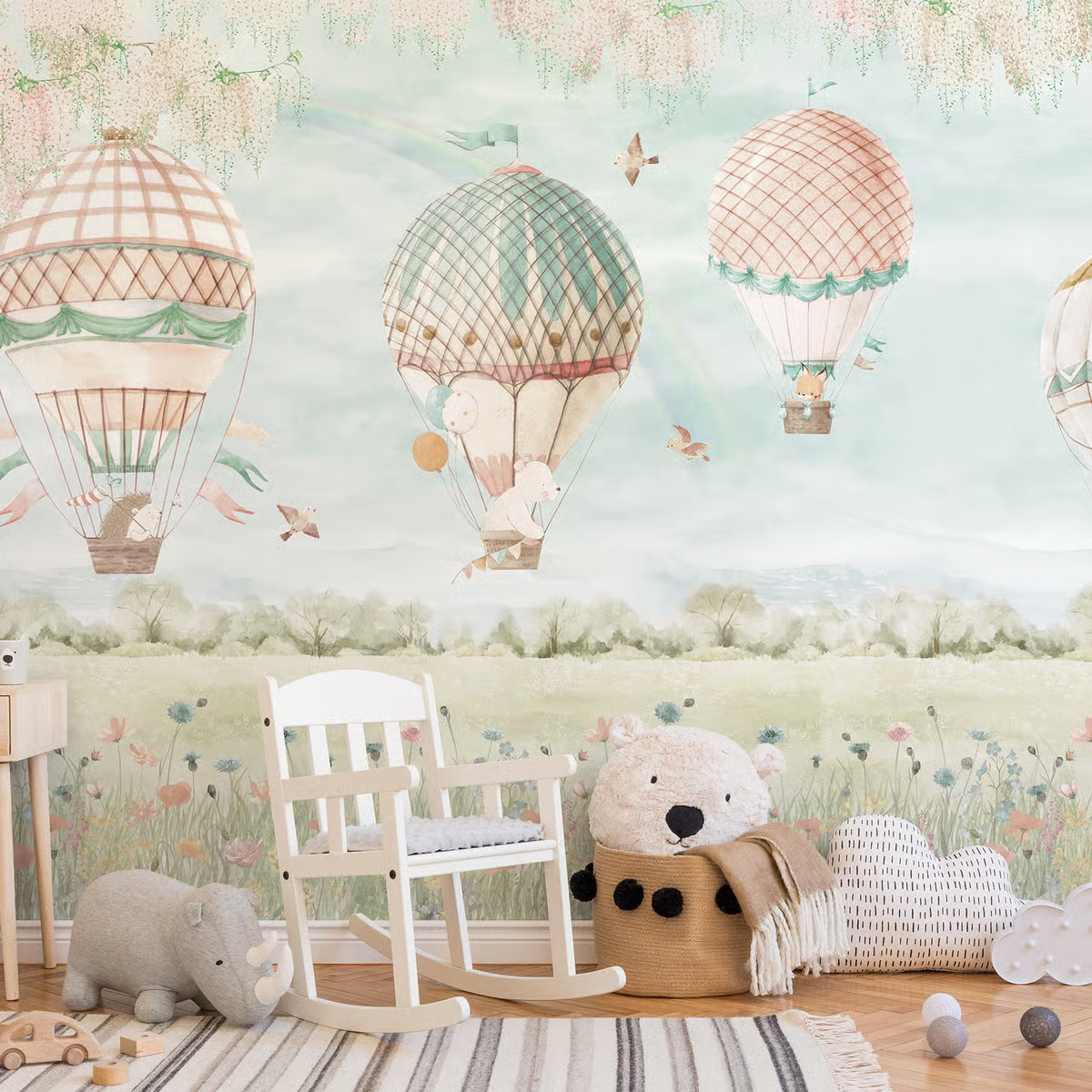
Pastel Dreamland Hot Air Balloon Wallpaper Mural – Wallhue
Pastels stay popular because they feel gentle without feeling blank. Modern pastels look dusty and muted, not sugary. Beige-blush, sage-cream, powder blue, and warm greige all play well with wood and white furniture.
For a polished look, repeat two colours across the room. Use one in textiles and one in a small accent, like a lamp base or basket. That small repetition makes the design feel intentional.
Nature-Inspired Wallpaper Designs
Midsummer Bloom depicts abundant summer flowers in full bloom – Cole & Son
Nature themes feel universal and calm. Clouds, gentle animals, botanicals, and soft florals all fit modern spaces. They also transition well into toddler years. A baby may not “read” the scene, but the room still feels welcoming.
Keep nature prints from feeling childish by choosing a restrained palette. Think beige linework, watercolour greens, or light greys. Pair with simple frames and natural textures.
Minimalist and Scandinavian Nursery Wallpaper
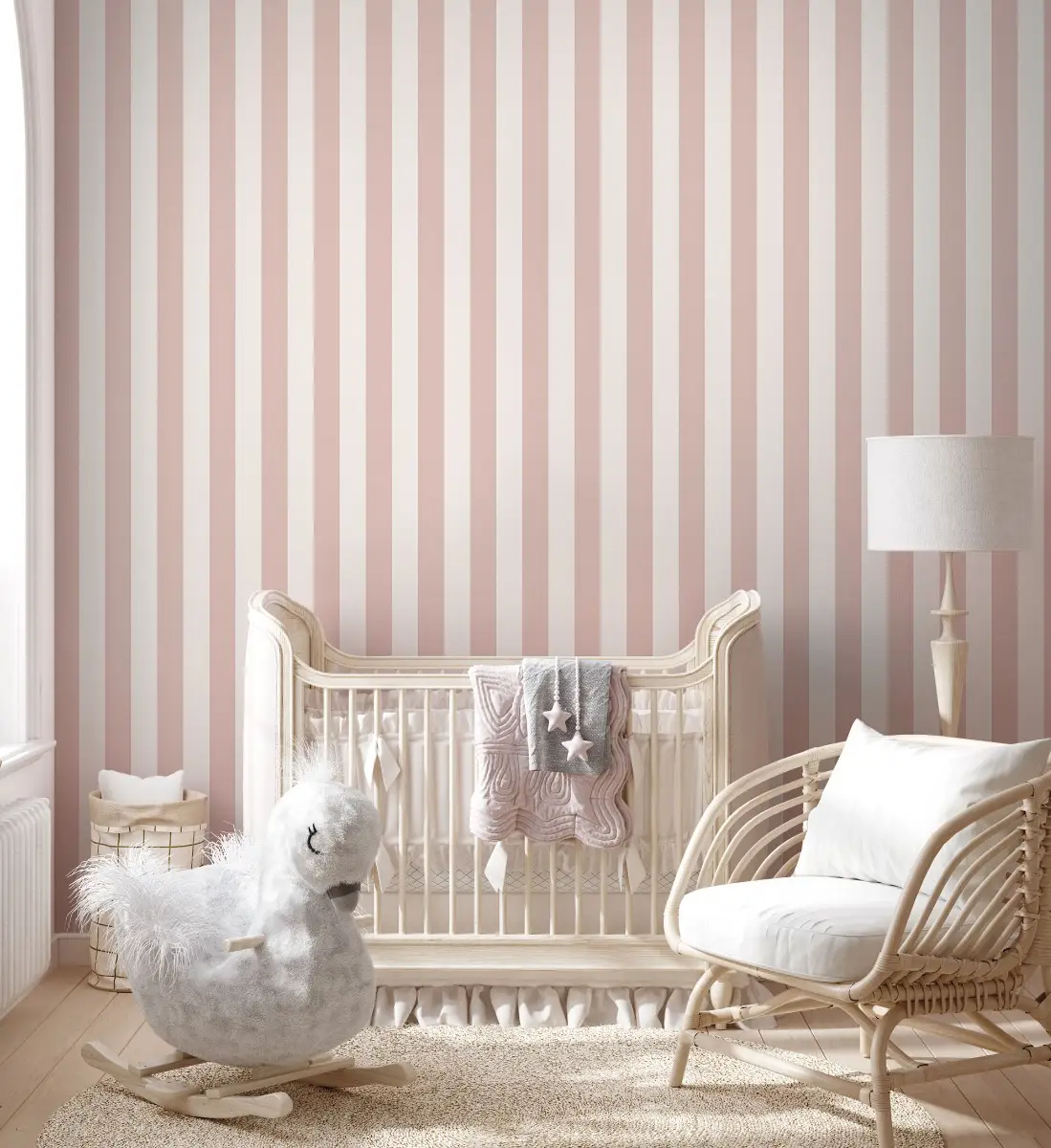
Soft Stripe Lines for Kids Nursery – Wallmur
Scandi-style nurseries rely on a calm rhythm. Light textures, soft stripes, tiny repeats, and neutral grounds do the work. This style pairs well with oak, birch, and matte white furniture. It also makes the room feel larger.
If you want minimal without feeling cold, add warmth through textiles. Use a textured rug, a knit throw, or a linen-look curtain. Let the wall pattern stay subtle.
Whimsical and Storybook-Inspired Wallpaper
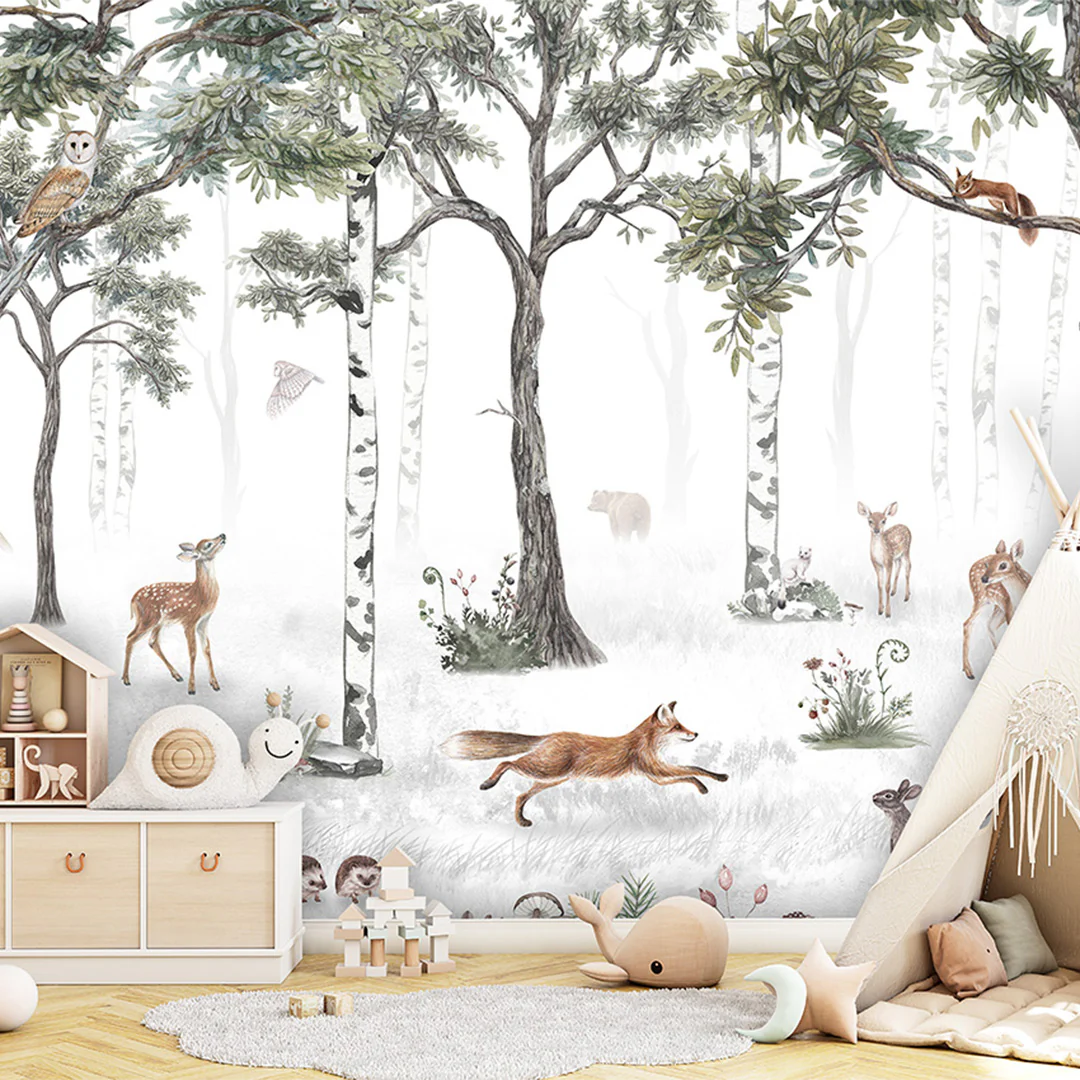
Woodland Adventure Peel and Stick Wall Mural – Tempaper & Co.
Whimsy can stay gentle. Look for hand-drawn lines, watercolour scenes, and soft “storybook” illustrations. These designs add charm without turning the room into a cartoon set.
Choose whimsy that leaves space to breathe. Too many characters or tiny details can feel visually loud. One mural wall can be perfect here, especially behind a crib.
Neutral and Gender-Neutral Wallpaper Styles
Sketchbook Nursery Animal Portraits Wallpaper Mural – Wallhue
Gender-neutral design has grown because it stays flexible. It also fits modern homes with open-plan flow. Neutral does not mean plain. It can mean warm creams, clay tones, soft greys, and gentle olive.
Try a neutral toile, a light botanical, or a minimal animal print. This keeps the nursery sweet now and stylish later. You can shift the room with bedding and art as your child grows.
Textured and Fabric-Look Wallpaper for Warmth
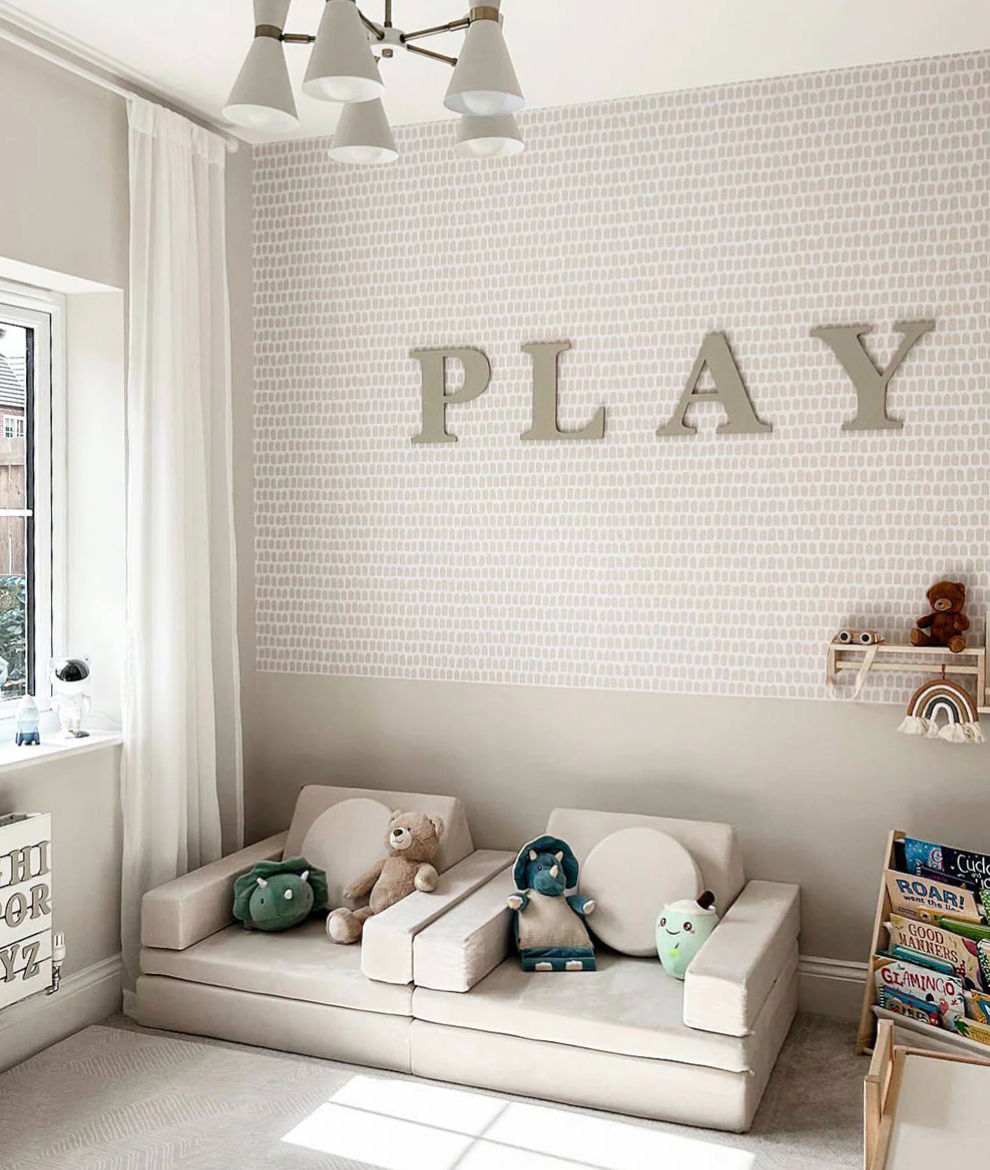
Tiny Brush Pattern (Linen Color) Removable Wallpaper – Livettes Wallpaper
Texture adds warmth without adding “noise.” Linen-look, soft plaster effects, and woven-style prints can make a nursery feel cosy. They also hide small wall flaws better than flat paint.
This option works well for full-room coverage. It creates depth while keeping the room calm. Add one small art piece and let the texture do the rest.
Wallpaper Styles to Use with Caution in Baby Rooms
Some looks can work, but they need careful handling in a nursery. If you love them, use them in small doses.
Bright Colors and High-Contrast Prints
High contrast grabs attention. That can feel fun during playtime and distracting at bedtime. Bright primaries, sharp black-white patterns, and neon accents can create visual fatigue in small rooms.
If you want a bold look, move it away from the sleep zone. Use it on a wall that the crib does not face. Then keep bedding and lighting soft.
Overly Busy or Complex Patterns
Very detailed prints can overwhelm a small nursery quickly. They also make the room harder to style. You end up “fighting” the wall with every textile and toy.
When in doubt, choose a simpler pattern and add interest through accessories. You can always scale up later.
How Modern Nursery Wallpaper Trends Reflect Parenting Lifestyles
Nursery trends now mirror how families live. Parents value flexibility, clean spaces, and easy maintenance. Many also want lower-toxin materials and a calmer design. That pushes demand toward softer palettes, minimal prints, and nature themes.
You may also notice regional differences. Some homes lean more neutral and textured. Others embrace soft murals and gentle illustration. Both can feel modern. The key is restraint and a plan for how the room will evolve.
Practical Tips for Designing a Baby Room with Wallpaper
Wallpaper can beat paint when you want instant character and a controlled pattern. An accent wall behind the crib can frame the room and keep costs lower. Full-room coverage can feel cocooning when the print stays soft. Either way, plan for real life: wipes, light shifts, and future updates.
Planning a Nursery That Grows with Your Child
Use this mini-process to choose a design that still feels right later.
- Pick two base colours and one accent that suit your home’s overall palette.
- Choose a pattern that reads calm from the crib and the rocker.
- Decide placement: one feature wall for flexibility, or full coverage for warmth.
- Test a sample in day and night light, then commit to the final order.