
What Is the 3-3-3 Rule for Fashion? A Stylist’s Guide
Fashion ‘rules’ continue to capture our attention. From seasonal color palettes to body shape formulas, these guidelines promise to demystify style. The 3-3-3 rule for fashion is one of the most popular concepts trending on platforms like TikTok and Instagram, offering a simple solution to the daily question of “What should I wear?” For beginners, this structure is a welcome relief from closet overwhelm.
But there’s a problem. Many people apply the 3-3-3 rule incorrectly, leading to outfits that feel mismatched, unflattering, or simply uninspired. The viral-friendly charts and graphics often miss the fundamental principles that make this formula work. It’s not just about picking nine items; it’s about choosing the right nine items.
If you want to move beyond basic tips and understand the real foundations of style, you need professional training. This guide will break down the 3-3-3 rule from a stylist’s perspective, revealing how to make it work for you. To master these concepts, consider our Online Personal Stylist Courses.
What Is the 3-3-3 Rule for Fashion?
At its core, the 3-3-3 rule is a simple wardrobe framework. You select 3 tops, 3 bottoms, and 3 layers (like jackets or cardigans). With these nine pieces, you can create up to 27 different outfits. This concept stems from the minimalist dressing movement and the principles of a capsule wardrobe.
Its purpose is to reduce decision fatigue while maximizing the mix-and-match potential of your clothes. For anyone who has ever stood in front of a full closet and felt they have nothing to wear, the 3-3-3 rule offers an easy entry point into building a more intentional and functional wardrobe.
The Real Reason the 3-3-3 for Fashion Rule Works
Most people think the 3-3-3 rule is about quantity. It’s actually about strategy—which is why professionals get different results than the average Pinterest board. The magic isn’t in the number 9; it’s in the harmony between the pieces. Here’s why it works when done correctly:
- Color Harmony: The items share a cohesive color palette, ensuring any combination looks intentional.
- Proportion & Silhouette: The cuts and shapes of the tops, bottoms, and layers are chosen to work together, creating balanced and flattering silhouettes.
- Fabric Compatibility: The textures and weights of the fabrics complement each other, allowing for smooth layering and a polished look.
- Value Contrast: A mix of light, medium, and dark pieces adds visual interest and dimension to your outfits.
When these elements are aligned, you create a small but powerful wardrobe where every piece has a purpose.
The Problem With the 3-3-3 Rule for Fashion
The simplicity of the rule is also its biggest weakness. It often fails when the foundational principles of styling are ignored. Your 27 potential outfits will fall flat if:
- The colors don’t relate. A random assortment of colors, even if you like them individually, will clash when combined.
- The cuts don’t flatter your body. A trendy pair of low-rise jeans or a boxy jacket might look great on a mannequin but may not work for your unique shape.
- The layers aren’t functional for your lifestyle. A heavy wool blazer is impractical if you live in a warm climate or have a casual daily routine.
This is where the oversimplified advice on TikTok and Pinterest goes wrong. They focus on the formula, not the fit or the individual. Even a “correct” seasonal color analysis won’t save a 3-3-3 capsule if the proportions are off or the styles don’t match your personality. To truly master color, you need to understand its nuances. Our Online Color Analysis Training Course teaches you how to select the perfect palette for any client.
How to Make the 3-3-3 Rule for Fashion Actually Work
A professional stylist uses core principles to build a wardrobe, and you can apply them to the 3-3-3 rule. Here is our method for creating a capsule that looks polished, feels authentic, and works for your life.
A. Pick the Right Color Palette
Forget generic seasonal palettes. A truly effective color story is based on your unique coloring. Consider the three dimensions of color:
- Undertone: Are your colors warm (yellow-based), cool (blue-based), or neutral? Your core neutrals should align with your undertone.
- Value: How light or dark are your ideal colors? This determines the level of contrast you can wear effectively.
- Chroma: How clear or muted are your best colors? Bright, clear colors will overpower someone with soft, muted coloring, and vice-versa.
Choose two to three neutrals and one or two accent colors that share the same undertone and chroma. This ensures every item will coordinate seamlessly.
B. Choose Bottoms Based on Body Shape + Fit
Bottoms are the foundation of your outfits. Selecting the right ones makes everything else look better. Pay attention to:
- Waist Rise: High-rise, mid-rise, or low-rise? The right rise can elongate your legs and define your waist.
- Line Direction: The cut of the leg (straight, wide, tapered) directs the eye and helps create a balanced silhouette.
- Fabric Weight & Structure: A structured twill will hold its shape and skim the body, while a drapey silk will flow. Choose fabrics that create the silhouette you want.
C. Add Layers That Create Verticality + Interest
Layers are the most powerful pieces in a 3-3-3 capsule. They pull an outfit together and refine your proportions.
- Blazers and Outerwear: A structured blazer adds sharp lines and can create the illusion of a more defined waist. The length is key—it should hit at a flattering point on your body.
- Cardigans and Vests: Softer layers like cardigans and vests can add dimension without rigidity. They are perfect for creating a more relaxed but still polished look.
Often, the layers matter more than the tops underneath. A simple tee or camisole becomes instantly elevated when paired with a well-fitting blazer or trench coat.
D. Accessorize Intentionally
Accessories are the final step that infuses your personality into the formula. Your shoes, bags, and jewelry should complete the outfit and align with the intended level of formality. Even with just nine garments, the right accessories can pivot an outfit from casual to corporate or from day to night. This is a key skill taught in our Online Image Consultant Course.
10 Outfit Examples Using the 3-3-3 Rule for Fashion
To illustrate the method, here are some outfit ideas built from strategic capsules.
- High-Contrast Palette: A black blazer, white tee, and dark wash jeans create a crisp, timeless look.
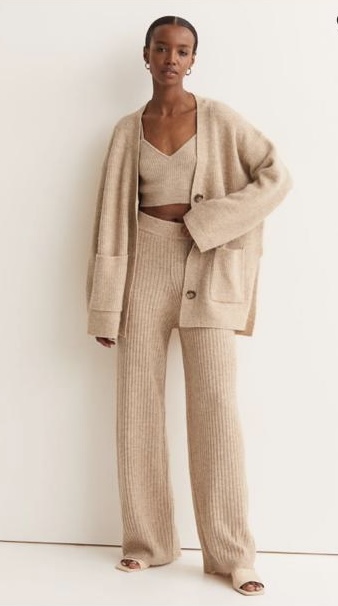
- Monochromatic Palette: A cream silk blouse, ivory trousers, and a beige cardigan result in a sophisticated, elongated silhouette.
- Soft Classic Look: A navy crewneck sweater, straight-leg khaki pants, and a camel trench coat feel elegant and understated.
- Smart Casual Look: A striped long-sleeve tee, black straight-leg jeans, and a leather jacket are effortlessly cool.
- Workwear Capsule: A white button-down shirt, black tailored trousers, and a grey blazer is a classic office-ready combination.
- Travel Capsule: A soft grey tee, comfortable black joggers, and a long, neutral-toned cardigan are perfect for a long flight.
- Creative Professional: A jewel-toned silk camisole, wide-leg dark denim, and a printed kimono-style jacket.
- Weekend Errands: A simple white t-shirt, light-wash straight-leg jeans, and a utility jacket.
- Date Night: A black lace-trimmed camisole, dark skinny jeans, and a black structured blazer.
- Transitional Weather: A fine-knit turtleneck sweater, medium-wash jeans, and a classic trench coat.
Should You Use the 3-3-3 Rule for Fashion in 2026?
The 3-3-3 rule remains a relevant and valuable tool, especially for certain applications.
- It works for beginners who need a simple system to start building a functional wardrobe.
- It works for travelers who want to pack light without sacrificing style.
- It works for anyone experiencing closet overwhelm and looking for a reset.
However, it does not replace the nuanced knowledge of a professional stylist. The 3-3-3 rule is a framework, not a complete style education. To truly create transformative results for yourself or for clients, you must understand the principles of color theory, body shape analysis, and style identity.
Ready to move beyond the basics? Our Online Personal Stylist Courses and Online Image Consultant Training provide the expert knowledge you need.
FAQ: The 3-3-3 Rule for Fashion
1. What is the 3-3-3 rule for fashion?
The 3-3-3 rule is a simple wardrobe formula where you choose 3 tops, 3 bottoms, and 3 layers to create up to 27 mix-and-match outfits. It’s a beginner-friendly way to build an easy, versatile capsule wardrobe without overthinking your style.
2. How does the 3-3-3 rule help you get dressed faster?
By limiting your choices, it reduces decision fatigue. Every piece is selected to coordinate, so you can quickly combine items into polished outfits without guessing what matches.
3. What should I include in my 3 tops, 3 bottoms, and 3 layers?
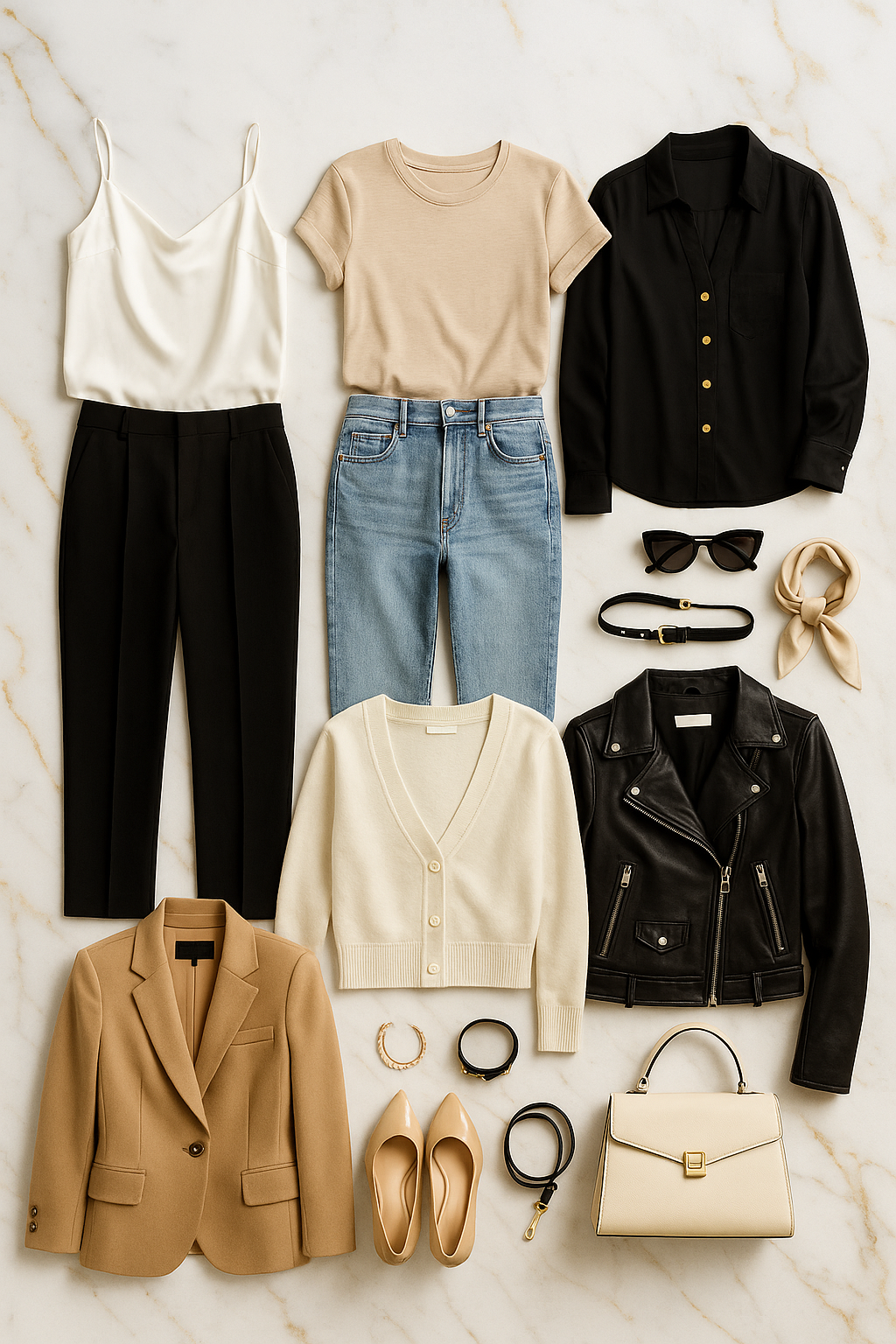
Choose pieces that share a cohesive color palette, similar levels of formality, and compatible silhouettes. Neutrals and classic pieces work best—such as tailored trousers, straight-leg jeans, structured blazers, and simple tops that layer cleanly. Shop the 3-3-3 capsule below. We chose shoes instead of layers!
4. Can the 3-3-3 rule work for workwear, travel, or everyday outfits?
Yes. The rule is flexible enough to create capsules for the office, travel, or casual daily outfits. The key is customizing the pieces to match your lifestyle—such as comfortable bottoms for travel or structured layers for professional environments.
5. Does the 3-3-3 rule work for all body shapes?
It works if the pieces are chosen intentionally. Selecting the right rise, cut, fabric, and proportions for your body shape is what makes the formula flattering. The rule itself is neutral—your results depend on choosing silhouettes that complement your lines.
6. What colors work best for a 3-3-3 wardrobe?
Stick to a unified color palette based on your undertone, value contrast, and chroma. This makes mixing and matching easier and prevents pieces from clashing. (If you’re unsure, a color analysis course helps you choose the right palette.)
7. Is the 3-3-3 rule the same as a capsule wardrobe?
It’s a simplified version of a capsule wardrobe. Instead of curating a full collection of 20–30 pieces, you start with a small, strategic set of 9 pieces that create multiple outfits. It’s easier for beginners who feel overwhelmed by large capsules.
8. Can I use more than 3 items in each category?
Yes. The 3-3-3 framework is a guideline, not a restriction. Many people expand it to 4-4-4 or build multiple 3-3-3 capsules for different seasons or lifestyle needs. The value comes from the intentional selection—not the number.
9. Why doesn’t the 3-3-3 rule work for some people?
It fails when pieces don’t relate to each other in color, fabric weight, silhouette, style personality, or fit for the body shape. When these aren’t aligned, outfits feel mismatched or unflattering.
10. How do I build a 3-3-3 wardrobe that actually looks put-together?
Start by identifying a cohesive color palette, choose bottoms that flatter your proportions, and select layers that create verticality. Add accessories that reinforce your style personality. Professional stylists use these principles to create capsules that feel elevated.
11. Can beginners use the 3-3-3 rule without professional help?
Yes, but your results improve dramatically when you understand color theory, body shape analysis, and wardrobe planning. Many beginners use this rule as a starting point and later invest in training to refine their skills.
12. Is the 3-3-3 rule outdated?
No. It remains popular because it simplifies wardrobe planning. However, the modern approach focuses less on minimalism and more on creating a functional, personalized wardrobe based on color, proportion, and lifestyle needs.
Your Professional Upgrade Path
If you want to go beyond Pinterest-level rules and master color, proportion, and styling psychology—start with our online training. You’ll learn the techniques professionals use to build 100+ outfits from any wardrobe. Choose your path to becoming a styling expert:
✔ Online Color Analysis Certification: Master the art and science of color to create flattering palettes for any client.
✔ Online Image Consultant Training: Learn the complete system for style, from body shape analysis to personal branding.
✔ Personal Stylist Training Course Online: Build a successful career by transforming closets and building confidence.
Michelle T. Sterling is an American award-winning, internationally renowned image consultant, personal stylist, and online personal shopper. She’s available for in-person consultations if you’re located in Dubai, New York, DC, San Francisco, or Miami, or she provides virtual consultations to clients worldwide. Her style advice has been featured in the Wall Street Journal, CNN, Gulf News, Details Magazine, and Forbes, among others.