
How Do You Become an Image Consultant?
How Do You Become an Image Consultant? At a Glance
To become an image consultant, complete professional training in appearance, behavior, communication, personal style, color, wardrobe, and client consultation. Then practice with real people, choose a specialty, create clear services, and learn how to market and operate your business professionally.
Becoming an image consultant involves more than developing a good eye for fashion.
An image consultant helps clients understand and manage how they are perceived through appearance, behavior, and communication. Depending on their training, image consultants may work with private individuals, professionals, executives, companies, entrepreneurs, or public figures.
Some consultants focus primarily on wardrobe and personal style. Others specialize in professional image, executive presence, etiquette, communication, color analysis, personal branding, or corporate training.
The path you choose will depend on the type of clients you want to serve and the depth of work you want to provide.
What Does an Image Consultant Do?
An image consultant helps clients align their external presentation with their identity, lifestyle, personal goals, or professional objectives.
Services may include:
- Personal color analysis
- Body and facial analysis
- Personal style development
- Wardrobe evaluation
- Closet editing
- Personal shopping
- Outfit creation
- Grooming recommendations
- Professional appearance
- Personal-brand alignment
- Business and social etiquette
- Communication guidance
- Executive presence
- Corporate workshops
- Media-image preparation
Image consulting is broader than selecting attractive clothes.
A trained consultant considers what the client wants to communicate, how the client currently sees themselves, how other people may perceive them, and whether their appearance and behavior support the image they want to project.
Is an Image Consultant the Same as a Personal Stylist?
The professions overlap, but they are not identical.
A personal stylist generally focuses on clothing, shopping, wardrobes, and outfit creation.
An image consultant may offer those same services while also addressing perception, self-image, professional presence, behavior, communication, etiquette, and personal branding.
“A well-trained image consultant can usually work as a personal stylist, but a personal stylist is not necessarily qualified to work as an image consultant. Both require a strong understanding of fashion, but image consulting goes further because it involves managing how a client is perceived and helping that person communicate a deliberate, authentic image.”
— Michelle T. Sterling, Founder of Sterling Style Academy
Read What’s the Difference Between an Image Consultant and a Personal Stylist? for a more detailed comparison.
Step 1: Decide What Type of Image Consultant You Want to Become
Before choosing a course, think about the work you want to perform.
You may want to specialize in:
- Personal image consulting
- Personal styling
- Wardrobe consulting
- Personal shopping
- Color analysis
- Corporate image consulting
- Executive presence
- Etiquette and communication
- Media and personal-brand consulting
You do not need to choose one permanent specialty before beginning your training. However, understanding your interests will help you select an appropriate course.
Someone who wants to offer color analysis as an additional service may not need the same level of training as someone planning to advise executives on professional image, perception, communication, and presence.
Explore Types of Image Consultants: Which Career Specialization Is Right for You? to compare possible career directions.
Step 2: Complete Professional Image Consultant Training
Image consulting is not a universally licensed profession, but professional training is still important.
Clients are paying for more than your personal opinion. They expect you to understand how visual elements communicate and how to make recommendations that suit their bodies, coloring, personalities, professions, lifestyles, cultures, and goals.
A comprehensive image consultant course should address subjects such as:
- Elements and principles of design
- Personal color analysis
- Body and facial analysis
- Line, shape, scale, and proportion
- Personal style
- Wardrobe planning
- Closet consultation
- Personal shopping
- Grooming
- Visual communication
- Client consultation
- Self-image and perception
- Professional behavior
- Communication
- Business development
- Marketing
“A low-cost course that simply provides a certificate is unlikely to prepare someone for a successful career as an image consultant. Becoming a legitimate professional requires substantial training, practical experience, and guidance from someone who has actually worked in the industry.”
— Michelle T. Sterling
Read How to Become a Certified Image Consultant for a more detailed explanation of certification, course selection, and professional preparation.
Step 3: Learn the Foundations of Appearance, Behavior, and Communication
Professional image consulting is traditionally grounded in three areas.
Appearance
Appearance includes clothing, color, fit, grooming, proportion, personal style, wardrobe, and the visual message a person communicates.
Behavior
Behavior includes etiquette, professionalism, social awareness, emotional control, interpersonal conduct, and how a person responds in different environments.
Communication
Communication includes verbal language, tone, listening, posture, expression, body language, and the ability to communicate appropriately in social and professional situations.
Not every consultant offers every service. However, a comprehensive image consultant should understand how these areas affect one another.
A polished wardrobe may create a strong first impression, but behavior and communication determine whether that impression is sustained.
Step 4: Understand Self-Image and Perception
Image consulting is deeply connected to how clients see themselves.
A client may seek help after:
- Gaining or losing weight
- Changing careers
- Receiving a promotion
- Returning to work
- Moving to a new country
- Going through a divorce
- Becoming more visible professionally
- Experiencing a change in age, lifestyle, or identity
These are not purely clothing problems.
A strong image consultant listens carefully and recognizes that self-image can be delicate. The goal is not to impose the consultant’s taste or transform the client into someone unfamiliar.
The goal is to understand the client’s inner qualities and help project them through an appropriate outer presence.
Consultants with backgrounds or additional education in psychology, emotional intelligence, communication, etiquette, coaching, diplomacy, or human behavior may find those skills valuable.
Step 5: Practice With Real People
Training gives you the methodology. Practice develops judgment.
Before charging premium fees, work with different people and apply what you have learned.
Practice may include:
- Conducting color analyses
- Assessing body proportions
- Completing style consultations
- Evaluating wardrobes
- Creating shopping plans
- Building sample lookbooks
- Practicing client interviews
- Explaining recommendations
- Delivering written follow-up
- Requesting feedback
Try to work with people of different ages, body types, professions, coloring, cultures, and style preferences.
New consultants may initially offer selected consultations at a discount, without charge, or through volunteer work.
This should have a clear purpose, such as gaining experience, improving a specific skill, obtaining a testimonial, or developing a case study.
Step 6: Choose Your First Services
Do not launch with every service you learned during training.
Begin with two or three services you can explain and deliver confidently.
Possible starting services include:
Personal Style Consultation
This may include a client interview, style assessment, lifestyle analysis, personal-style direction, and written recommendations.
Wardrobe Consultation
This may include a closet review, outfit creation, fit evaluation, wardrobe-gap analysis, and shopping priorities.
Personal Color Analysis
This may include recommendations for clothing colors, neutrals, metals, makeup, hair-color direction, and color combinations.
Personal Shopping
This may involve in-person shopping, pre-shopping, online sourcing, or a curated shopping plan.
Professional Image Consultation
This may include an evaluation of the client’s current professional image, wardrobe, grooming, desired perception, and visual credibility.
Each service should make clear:
- Who it is for
- What problem it solves
- What is included
- How it is delivered
- What the client receives
- How much it costs
Step 7: Learn How to Run the Business
Most image consultants are not simply practitioners. They are business owners.
You will need:
- A target market
- Service descriptions
- Pricing
- Client questionnaires
- Agreements and policies
- Scheduling and payment systems
- A professional website or service page
- Testimonials
- Marketing content
- Referral relationships
- Bookkeeping
- A follow-up process
“Whether you become an image consultant, personal stylist, or personal shopper, you are ultimately building a business—not simply earning a certification. The most successful professionals begin with a genuine passion for fashion, but they also have the drive and discipline to keep developing their business.”
— Michelle T. Sterling
Certification gives you the foundation. Business development determines whether potential clients discover, trust, and hire you.
Step 8: Build Credibility
When you are new, you may not yet have an extensive client portfolio.
You can still build credibility through:
- Professional certification
- Practical experience
- Testimonials
- Case studies
- Volunteer work
- Workshops
- Professional associations
- Media contributions
- Partnerships
- Educational content
- A clear methodology
- Strong professional presentation
Avoid exaggerating your experience or making unrealistic income promises.
Credibility develops when your training, message, presentation, and client work consistently support one another.
Step 9: Market to Potential Clients
Clients may not search for the words “image consulting.”
They may search for help with a specific problem:
- I have nothing to wear to work.
- My wardrobe no longer fits.
- I need to dress for a promotion.
- I waste money on clothes I never wear.
- I need help looking polished on camera.
- I do not know which colors suit me.
- I need a wardrobe for a new climate.
- My appearance does not reflect my professional position.
Create content that addresses those real concerns.
“You are not creating content solely for your followers; you are creating it for potential buyers. Think about their problems and pain points. Address an immediate concern and demonstrate that you understand what the client is experiencing.”
— Michelle T. Sterling
Your content should show your knowledge without publishing all of your proprietary methodology or giving away the full consultation process.
Read Image Consultant Marketing Strategies to Get Better Clients Through Content for more guidance.
Step 10: Launch and Continue Developing
You do not need a perfect brand, large social-media following, or complicated website before working with your first clients.
You do need:
- Professional training
- A clear service
- A defined client
- A reliable consultation process
- Appropriate business systems
- The willingness to become visible
- The persistence to continue
Read How to Launch a Successful Image Consultant Career for a practical 90-day launch plan.

How Long Does It Take to Become an Image Consultant?
The timeline depends on the course format and your learning style.
An intensive in-person program may be completed in seven days or two weeks.
A self-paced online student may spread the curriculum over several weeks or months. Some students prefer to progress quickly, while others benefit from reviewing the lessons and practicing each skill before moving forward.
The goal is not simply to earn the certificate as fast as possible.
The goal is to understand and apply the material well enough to work confidently with clients.
Do You Need a Fashion Background?
No.
Students enter image consulting from many professions, including:
- Fashion
- Beauty
- Retail
- Coaching
- Psychology
- Human resources
- Communication
- Hospitality
- Education
- Marketing
- Corporate leadership
- Entrepreneurship
- Public relations
- Diplomacy
A fashion background may help, but a good training program should teach the technical principles required for image consulting.
The most important qualities include a willingness to learn, an interest in people, perceptiveness, tact, communication skills, and the discipline to practice.
Can Image Consulting Be a Side Business?
Yes.
Many consultants begin part-time while continuing another profession.
Image consulting can complement careers in:
- Hair styling
- Makeup artistry
- Photography
- Coaching
- Retail
- Beauty
- Fashion
- Corporate training
- Etiquette
- Personal branding
- Events
Focused services such as color analysis, wardrobe consulting, personal shopping, and virtual styling can be offered around another schedule.
However, even a side business should be treated professionally.
Read Can Image Consulting Be a Profitable Side Hustle in 2026? for a realistic look at beginning part-time.
How Much Can an Image Consultant Earn?
Image consultant income varies considerably because many consultants are self-employed.
Earnings depend on:
- Services
- Prices
- Clientele
- Location
- Experience
- Marketing
- Professional network
- Corporate work
- Workshops
- Media visibility
- Referrals
- Repeat clients
- Available working hours
An established consultant may build annual revenue of $75,000 to $130,000 or more. Consultants serving affluent clients, executives, companies, or training audiences may generate substantially higher revenue.
Exceptional months of $30,000 or more are possible, but these results are not typical or guaranteed for a new consultant.
Revenue also differs from profit. Business owners must account for expenses such as marketing, travel, software, tools, taxes, contractors, and professional development.

Final Answer: How Do You Become an Image Consultant?
To become an image consultant:
- Understand the full scope of the profession.
- Choose the type of image consulting work you want to perform.
- Complete comprehensive professional training.
- Learn appearance, behavior, and communication.
- Develop sensitivity to self-image and perception.
- Practice with real people.
- Create several clear services.
- Build your business systems and credibility.
- Market consistently to potential clients.
- Continue developing after certification.
A certificate is the beginning of the career—not the entire career.
Your training gives you a methodology. Practice develops confidence. Business discipline, credibility, visibility, and persistence determine whether the work becomes a lasting profession.
Begin Your Image Consultant Training
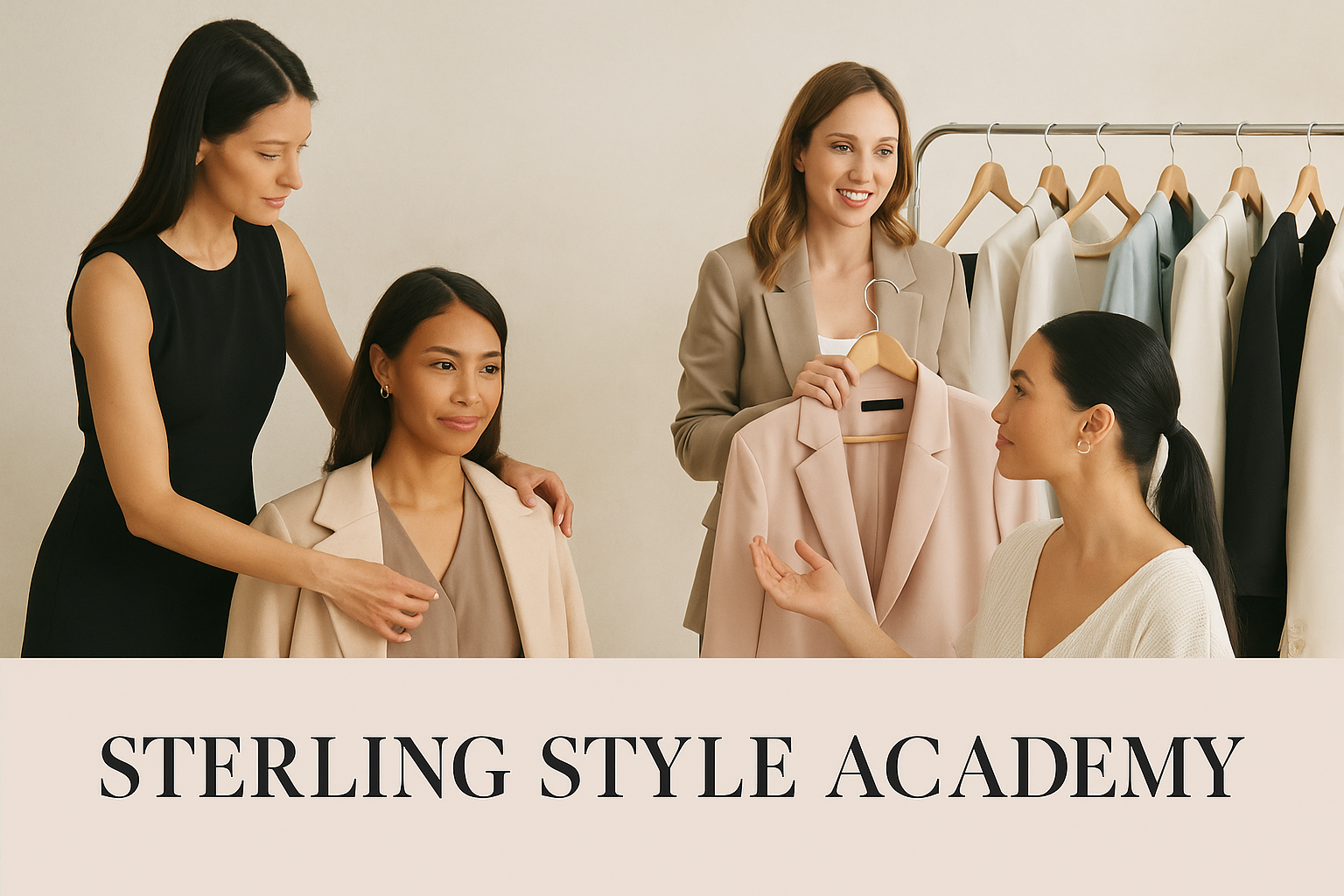
Sterling Style Academy offers three comprehensive pathways for aspiring image consultants.
The 7-Day Image Consultant Training is designed for students who want an accelerated, immersive certification experience.
The 2-Week Image Consultant Training allows students to study the material at a more gradual and methodical pace.
The Online Image Consultant and Personal Stylist Certification Program provides flexible, self-paced training for students who prefer to study remotely.
Choose the program that best reflects the way you learn, the time you have available, and the level of professional preparation you want.