
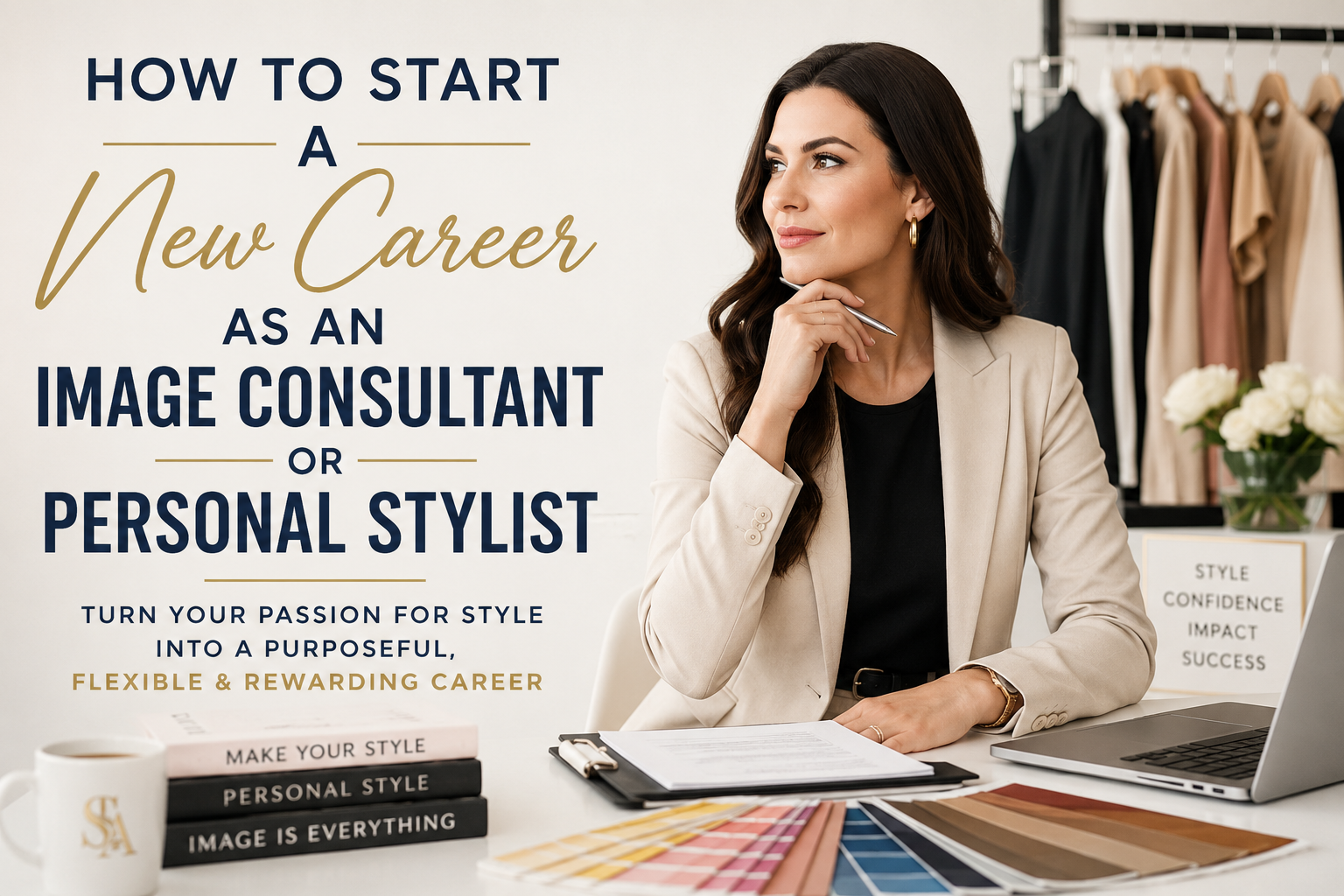
How to Start a New Career as an Image Consultant or Personal Stylist
Starting a new career as an image consultant or personal stylist can turn your knowledge of fashion, style, color, and personal presentation into a professional service that genuinely helps people.
Originally Published October 2, 2010 | Updated July 27, 2026
However, enjoying fashion or being known as the best-dressed person in your social circle is not the same as knowing how to style clients professionally.
A successful image consultant or personal stylist must understand how to assess another person objectively, identify their needs, recommend clothing for their body proportions and coloring, develop practical wardrobes, communicate professionally, and build services that clients are willing to pay for.
You do not need a traditional fashion degree, years of retail experience, or an existing industry network to begin. You do need professional training, a structured consultation process, practical experience, and a clear understanding of the services you want to offer.
Sterling Style Academy provides in-person, live online, and self-paced certification programs for students who want to begin a new career as an image consultant, personal stylist, or personal shopper.
How to Start a New Career as an Image Consultant or Personal Stylist: At a Glance
To start a new career as an image consultant or personal stylist:
- Decide whether you want to focus on personal styling or broader image consulting.
- Complete professional training that matches the services you want to offer.
- Learn how to assess personal style, coloring, body proportions, wardrobes, and lifestyle needs.
- Develop a repeatable consultation process.
- Begin with services you are properly trained to provide.
- Practice with real people and learn how different clients respond.
- Create a professional website and clearly explain your services.
- Set prices based on the value, preparation, and time involved.
- Collect testimonials and examples of client results.
- Continue developing your expertise after certification.
A certificate can give you the foundation to begin. Your professional reputation will depend on how well you apply what you learned.
What Does an Image Consultant Do?
An image consultant helps clients understand and manage the image they communicate through their appearance, clothing, personal presentation, and professional presence.
Depending on the consultant’s education, experience, and specialization, image consulting services may include:
- Personal style consultations
- Color analysis
- Body-shape and clothing-silhouette analysis
- Wardrobe consulting
- Personal shopping
- Personal branding
- Professional image development
- Business dress
- Etiquette
- Communication
- Executive presence
- Corporate training
Not every image consultant offers all these services.
A newly certified consultant may begin with styling, color, wardrobe, and shopping services. More advanced work involving executives, leadership communication, organizational training, or reputation strategy requires additional experience, professional judgment, and specialization.
Image consulting is a broad profession. Your training provides the foundation, while your career direction determines how your services develop.
What Does a Personal Stylist Do?
A personal stylist helps clients make better decisions about clothing, accessories, wardrobes, and outfits.
Personal styling services may include:
- Defining personal style
- Evaluating body proportions
- Recommending clothing silhouettes
- Reviewing an existing wardrobe
- Identifying wardrobe gaps
- Creating outfits
- Building capsule wardrobes
- Shopping in stores
- Shopping online
- Creating digital look books
- Planning work wardrobes
- Preparing travel wardrobes
- Styling clients for events
- Updating a client’s image after a career or lifestyle change
A personal stylist does not simply select clothing that reflects the stylist’s own taste.
The stylist must understand the client’s body, coloring, preferences, budget, profession, lifestyle, comfort level, and image goals. The final wardrobe should look like an elevated version of the client—not a copy of the stylist.
Image Consultant vs. Personal Stylist: Which Career Is Right for You?
The professions overlap, but they are not identical.
A personal stylist generally focuses on:
- Clothing
- Wardrobes
- Outfit creation
- Shopping
- Personal style
- Accessories
- Dressing for different occasions
An image consultant may provide personal styling while also advising clients on:
- Personal branding
- Professional appearance
- Color analysis
- Body-shape analysis
- Business image
- Communication
- Etiquette
- Executive presence
- How they are perceived by others
Choose personal styling when your primary interest is helping clients dress well, shop effectively, and build wardrobes.
Choose image consulting when you want a broader foundation and may eventually work with professionals, entrepreneurs, executives, public-facing clients, or organizations.
You can also begin as a personal stylist and expand your qualifications later.
Do You Need Fashion Experience to Become a Personal Stylist?
No. You do not need previous employment in fashion, retail, design, or luxury sales to become a personal stylist.
Those experiences may be useful, but they do not automatically teach someone how to conduct professional consultations or make objective recommendations for clients.
Aspiring stylists often enter the profession from backgrounds such as:
- Marketing
- Finance
- Human resources
- Retail
- Beauty
- Hospitality
- Coaching
- Education
- Public relations
- Entrepreneurship
- Corporate leadership
- Content creation
Your previous career may actually help you establish a specialty.
A former corporate professional may understand executive wardrobes. A beauty professional may combine styling with makeup or grooming. A marketing professional may be well positioned to advise entrepreneurs on visual personal branding.
The key is learning the technical and client-facing skills that your previous profession did not provide.
Do You Need a Fashion Degree to Become an Image Consultant?
No. Image consulting and personal styling are service professions rather than regulated professions requiring a specific university degree.
However, the absence of a degree requirement does not mean training is unnecessary.
Clients are paying for professional recommendations that affect their confidence, wardrobes, careers, purchases, and how they present themselves. You should understand the principles behind your recommendations rather than relying only on instinct.
Professional certification can help you learn:
- How to assess clients
- How clothing lines affect the body
- How to evaluate color
- How to identify personal style
- How to conduct wardrobe consultations
- How to shop for another person
- How to structure services
- How to communicate advice professionally
- How to start and operate a styling business
Certification does not replace talent, practice, or business development. It gives those qualities a professional structure.
Can You Change Careers Later in Life?
Yes. There is no required age for becoming an image consultant or personal stylist.
Many people enter the profession after building careers in completely different industries. Their previous work and life experience may help them understand clients, communicate with confidence, manage projects, solve problems, and operate a business.
A career change may be especially appropriate when you:
- Want more creative work
- Want to start your own business
- Need a career that can include virtual services
- Want to work directly with clients
- Have always been interested in style and personal image
- Want greater flexibility
- Are returning to work after raising a family
- Want to build a second career
- Want to combine fashion with business or consulting
You are not starting from nothing. You are adding image consulting or styling expertise to the professional and personal experience you already possess.
What Skills Does an Image Consultant or Personal Stylist Need?
A professional stylist needs both technical knowledge and interpersonal skills.
Technical Styling Skills
These may include:
- Personal style assessment
- Color analysis
- Body-shape analysis
- Clothing-silhouette selection
- Wardrobe planning
- Outfit coordination
- Fabric and garment knowledge
- Personal shopping
- Accessory selection
- Fit assessment
- Alteration recommendations
- Capsule wardrobe creation
Consultation Skills
You must also know how to:
- Ask useful questions
- Listen without imposing your preferences
- Interpret what the client is actually trying to accomplish
- Explain your recommendations
- Give honest feedback tactfully
- Manage expectations
- Maintain confidentiality
- Establish professional boundaries
- Help clients make decisions
- Keep consultations organized
Business Skills
A styling career also requires:
- Service development
- Pricing
- Scheduling
- Client communication
- Marketing
- Sales
- Website development
- Follow-up
- Recordkeeping
- Relationship management
- Referral generation
A strong stylist who cannot explain, package, or sell their services may struggle to build a sustainable business.
Why Professional Training Matters
Personal taste is subjective. Professional styling requires a method.
Without professional training, aspiring stylists often:
- Dress every client according to their own style
- Apply the same rules to everyone
- Recommend trends without considering the client’s lifestyle
- Focus on shopping rather than consultation
- Struggle to explain why something works
- Undercharge because their services lack structure
- Offer too many services before developing competence
- Lack the confidence to direct the client
- Treat the work casually instead of professionally
Training should teach you how to move from “I think this looks nice” to a clear, supportable recommendation based on the client’s proportions, coloring, personality, goals, and environment.
Sterling Style Academy has provided career-focused image consultant and personal stylist education since 2005, with online and in-person programs covering styling, color, wardrobe consulting, personal shopping, and business development.
Which Sterling Style Academy Course Should You Take?
The right course depends on the career you want to build.
5-Day Personal Stylist Training
The 5-Day Personal Stylist Training and Personal Shopper Certification is designed for students who want to focus primarily on personal styling, wardrobe development, outfit creation, and personal shopping.
This program is appropriate when you want to provide services such as:
- Personal style consultations
- Wardrobe reviews
- Outfit creation
- Capsule wardrobes
- Personal shopping
- Online personal shopping
- Travel wardrobes
- Virtual personal styling
Choose this program when your main goal is to work with private styling clients rather than provide the broader range of services associated with image consulting.
7-Day Image Consultant Training
The 7-Day Image Consultant Training Certification Program offers a broader in-person foundation.
It is appropriate for students who want to combine:
- Image consulting
- Personal styling
- Color analysis
- Body and clothing-silhouette analysis
- Wardrobe consulting
- Personal shopping
- Personal branding principles
- Business development
Choose this program when you want a more comprehensive qualification and may eventually work with professionals, entrepreneurs, executives, or public-facing clients.
2-Week Image Consultant Training
The 2-Week Image Consultant Training, Personal Stylist and Personal Shopper Certification Program is the most immersive of these in-person options.
It is designed for individuals who want additional time to develop their consultation skills and prepare to offer a wider range of professional services.
Choose the two-week program when you want:
- A comprehensive in-person training experience
- More time to apply the methodology
- A broader image consulting and styling foundation
- Preparation to establish multiple service categories
- An intensive career-development experience
Completing an intensive course does not instantly make someone a world-class consultant. It provides the professional foundation from which expertise can be built.
Live Online Personal Stylist Training
The Live Online Personal Stylist Training Certification Program provides instructor-led education without requiring travel.
This may be the right option when you:
- Want live interaction
- Need an individually arranged schedule
- Live outside an in-person training city
- Prefer to learn from home
- Want direct feedback
- Plan to provide virtual styling services
- Need to combine training with work or family commitments
Live online education can also help aspiring stylists become comfortable using the same video and digital tools they may later use with clients.
Online Image Consultant and Personal Stylist Training
The Online Image Consultant Training and Online Personal Stylist Training Course provides a flexible option for students who cannot attend an intensive in-person program.
This format may work well for:
- International students
- Career changers
- Working professionals
- Parents
- Entrepreneurs
- Boutique owners
- Fashion content creators
- Beauty professionals
- Existing stylists expanding their skills
Self-paced learning requires discipline. Do not rush through the course simply to obtain the certificate. Complete the assignments, practice the consultation methods, and apply the training to real people.
How to Choose the Right Training Program
Choose the 5-Day Personal Stylist Training when you want to focus on wardrobe styling and personal shopping.
Choose the 7-Day Image Consultant Training when you want a broader in-person image consulting foundation.
Choose the 2-Week Image Consultant Training when you want the Academy’s most immersive in-person pathway among these options.
Choose the Live Online Personal Stylist Training when you want instructor-led styling education without traveling.
Choose the Online Image Consultant and Personal Stylist Training Course when you want comprehensive online study with greater scheduling flexibility.
The longest course is not automatically the right course. Choose the program that prepares you for the work you genuinely want to perform.
What Services Can a New Personal Stylist Offer?
A newly trained personal stylist should begin with clearly defined services that match their qualifications.
Possible starting services include:
Personal Style Consultation
Help the client identify their style preferences, wardrobe needs, lifestyle requirements, and desired image.
Wardrobe Consultation
Review the client’s existing clothing, identify what works, remove unsuitable items, and create a plan for missing pieces.
Personal Shopping
Select clothing and accessories that fit the client’s body, style, budget, and lifestyle.
Online Personal Shopping
Research and recommend clothing through curated digital selections and direct shopping links.
Outfit Creation
Create outfits using the client’s existing wardrobe or newly purchased items.
Capsule Wardrobe Planning
Develop a coordinated wardrobe containing versatile pieces that work together.
Travel Wardrobe Planning
Create outfits and packing plans based on the destination, weather, activities, and luggage limitations.
Virtual Personal Styling
Deliver consultations, shopping, wardrobe reviews, and outfit planning through video calls and digital resources.
Begin with a small group of well-structured services rather than creating a long menu of offers you have not yet mastered.
What Services Can a New Image Consultant Offer?
A newly trained image consultant may begin with:
- Personal style consultations
- Color analysis
- Body-shape analysis
- Clothing-silhouette recommendations
- Wardrobe consulting
- Personal shopping
- Professional wardrobe planning
- Personal branding through appearance
- Interview image preparation
- Virtual image consultations
Do not claim expertise in executive presence, leadership communication, reputation management, corporate culture, or crisis advisory unless you have the additional background required to perform that work credibly.
A professional consultant knows both the value and the limits of their expertise.
Can You Work Online as a Personal Stylist or Image Consultant?
Yes. Many styling and image services can be delivered virtually.
Online services may include:
- Virtual consultations
- Digital wardrobe reviews
- Online body analysis
- Online color analysis
- Personal shopping
- Digital outfit creation
- Capsule wardrobe planning
- Travel wardrobe planning
- Look books
- Professional wardrobe guidance
- Follow-up sessions
Virtual services allow you to work with clients outside your immediate area and can reduce the costs associated with maintaining a physical office or traveling to every appointment.
However, online styling is still a professional service. The consultation should have a clear process, preparation requirements, deliverables, and follow-up.
How to Start Your Image Consulting or Personal Styling Business
Step 1: Choose Your Professional Direction
Decide whether you want to become a personal stylist, image consultant, personal shopper, color analyst, or offer a combination of related services.
Step 2: Complete Appropriate Training
Choose a program that gives you the technical and practical skills required for your intended services.
Step 3: Practice Your Skills
Practice consultations with different people rather than styling only friends who share your taste, body shape, or lifestyle.
Step 4: Define Your Ideal Client
You might work with:
- Professionals
- Entrepreneurs
- Executives
- Men
- Women
- New mothers
- Career changers
- Public speakers
- Dating clients
- Travelers
- Clients who need modest fashion
- Clients undergoing weight or lifestyle changes
A defined audience makes your services and marketing easier to understand.
Step 5: Create Your Services
Every service should clearly state:
- Who it is for
- What problem it solves
- What is included
- How long it takes
- Whether it is virtual or in person
- What the client receives
- What it costs
- How to book
Step 6: Establish Your Professional Brand
Create:
- A business name
- A professional biography
- A website
- Service pages
- A consultation process
- Client forms
- Terms and conditions
- A payment method
- Professional email communication
Step 7: Begin Working With Clients
Do not wait until everything is perfect.
Begin with services you are qualified to deliver, document your results, ask for testimonials, and improve your process through experience.
Step 8: Continue Developing Your Expertise
Certification is the beginning of your professional development.
Continue learning about:
- Clothing
- Fit
- Retail
- Color
- Body proportions
- Client psychology
- Communication
- Business
- Marketing
- Cultural differences
- Professional image
- Technology used for virtual styling
How Do You Get Your First Personal Styling Clients?
Your first clients may come from:
- Professional contacts
- Friends and acquaintances
- Referrals
- Local networking
- Business groups
- Social media
- Educational content
- Partnerships with boutiques
- Hair and beauty professionals
- Photographers
- Career coaches
- Wedding professionals
- Corporate contacts
- Online search
Do not rely exclusively on social media.
A professional website with clear services, strong educational content, relevant credentials, and a direct booking process can attract clients who are actively searching for help.
Your first goal is not to appear famous. It is to make your service clear, trustworthy, and easy to purchase.
How Long Does It Take to Build an Image Consulting Career?
There is no single timeline.
Some graduates begin offering basic services shortly after completing training. Building a stable full-time business typically takes longer and depends on:
- The amount of time devoted to the business
- Previous professional experience
- Existing contacts
- Market demand
- Pricing
- Location
- Marketing ability
- Sales skills
- Service quality
- Client results
- Referrals
- Consistency
Avoid anyone who promises that certification alone will immediately create a high-income career.
Training provides the tools. You must still build the business.
Where Can an Image Consulting Career Lead?
An image consulting career can begin with personal styling, color analysis, wardrobe consulting, body analysis, and personal shopping.
With professional experience, further development, and specialization, some consultants expand into:
- Professional image strategy
- Personal branding
- Executive wardrobe consulting
- Leadership presence
- Communication
- Corporate training
- Speaking
- Workshops
- Etiquette
- Reputation and perception management
- Organizational advisory work
Michelle T. Sterling’s career through Global Image Group demonstrates how image consulting can develop into higher-level advisory work for professionals, leaders, and organizations.
Her work through Global Image Group is separate from Sterling Style Academy’s foundational certification programs. Students are not automatically trained to perform every Global Image Group service. Instead, her consulting career demonstrates the broader potential of the profession when technical knowledge is combined with business experience, communication expertise, professional judgment, and years of client work.
Learn more about Michelle T. Sterling’s career through Global Image Group.
How Sterling Style Academy and Global Image Group Are Connected
Sterling Style Academy is the professional training institution founded by Michelle T. Sterling to educate aspiring image consultants, personal stylists, personal shoppers, and color analysts.
Global Image Group represents Michelle’s advanced consulting work in executive presence, professional development, image strategy, communication, personal branding, and organizational training.
The two businesses serve different purposes:
- Sterling Style Academy provides the training foundation.
- Global Image Group demonstrates the advanced professional application of image consulting expertise.
This connection matters because Sterling Style Academy’s methodology was developed through real consulting experience rather than fashion theory alone. The Academy currently describes its programs as structured, career-focused training built around technical curriculum, real-world client systems, and business development.
Can Image Consulting Lead to Executive and Corporate Work?
Yes, but executive and corporate consulting should be treated as an advanced career direction.
A consultant may eventually advise professionals on:
- Executive wardrobes
- Professional image
- Personal branding
- Leadership presence
- Communication
- Business etiquette
- High-visibility appearances
- Organizational dress standards
- Professional development
This work requires more than knowing what clothing is flattering.
Executive and corporate clients may require an understanding of:
- Business environments
- Leadership
- Organizational culture
- Communication
- Status and hierarchy
- Reputation
- Stakeholder expectations
- Professional risk
- Cultural differences
Do not offer advanced corporate services simply because they command higher fees. Build the experience and competence required to provide real value.
Can You Become a World-Class Image Consultant?
Yes—but no course can instantly make someone a world-class image consultant.
Professional training can give you:
- Technical knowledge
- Consultation methods
- Client tools
- Business direction
- Professional terminology
- A structured foundation
- The confidence to begin
Becoming recognized at a high level depends on:
- The quality of your client work
- Your judgment
- Your communication
- Your reliability
- Continued education
- Business experience
- Client results
- Specialization
- Ethical standards
- Professional credibility
- Years of consistent development
Your certificate marks the beginning of your career. What you build from it determines your professional standing.
Frequently Asked Questions About Starting a Career as an Image Consultant or Personal Stylist
How do I start a career as an image consultant?
Begin by choosing professional image consultant training, developing your technical and consultation skills, defining the services you want to offer, practicing with real people, and creating a professional business structure.
How do I become a personal stylist?
Complete personal stylist training, learn how to assess clients and wardrobes, develop personal shopping and outfit-creation skills, create clearly priced services, and begin working with clients either virtually or in person.
Do I need a degree to become a personal stylist?
No. A specific university degree is not required. Professional training, practical skill, client experience, business development, and strong results are more directly relevant.
Is image consulting a good career change?
It can be a strong career change for someone who enjoys working with people, solving wardrobe and image problems, communicating recommendations, and building a service-based business.
Am I too old to become an image consultant?
No. Professional and life experience can strengthen your credibility and help you understand clients. There is no required age for entering the profession.
Can I become a personal stylist without working in fashion?
Yes. Many personal stylists enter the profession from unrelated industries. You still need to develop the technical, consultation, and business skills required to advise clients professionally.
What is the difference between a personal shopper and a personal stylist?
A personal shopper focuses primarily on sourcing and purchasing products. A personal stylist provides broader guidance on personal style, wardrobes, outfits, body proportions, and how clothing supports the client’s lifestyle and image.
What is the difference between a personal stylist and an image consultant?
A personal stylist primarily focuses on clothing, wardrobes, outfits, and shopping. An image consultant may provide these services while also working in broader areas such as professional image, personal branding, color, communication, or executive presence, depending on their qualifications.
Can I work from home as a personal stylist?
Yes. Virtual consultations, online personal shopping, digital wardrobe reviews, capsule wardrobe planning, outfit creation, and look books can all be delivered remotely.
How much can a personal stylist earn?
Income varies according to location, services, pricing, clientele, experience, marketing, and the amount of work performed. Certification does not guarantee a specific income.
How quickly can I start working after certification?
You may begin offering services once you have completed the necessary training and are confident that you can deliver those services professionally. Begin with services that match your current level of competence.
Which course should I take to become a personal stylist?
Choose the 5-Day Personal Stylist Training or Live Online Personal Stylist Training when your primary goal is personal styling and personal shopping.
Which course should I take to become an image consultant?
Choose the 7-Day Image Consultant Training, 2-Week Image Consultant Training, or Online Image Consultant and Personal Stylist Training Course for a broader image consulting foundation.
Does certification guarantee clients?
No. Certification provides education and professional credibility. You must still market your business, communicate your value, attract clients, deliver strong work, and build referrals.
Can an image consultant work with executives?
Yes, but executive image consulting requires additional professional experience, business understanding, communication skills, and judgment beyond foundational styling certification.
Start Your New Career as an Image Consultant or Personal Stylist
Starting a new career does not require abandoning everything you learned in your previous one.
Your experience in business, communication, sales, education, beauty, retail, leadership, marketing, or client service can become part of your professional advantage.
The next step is to add the technical training and consultation methodology required to work credibly with styling and image clients.
Explore the current Sterling Style Academy training pathways:
- 5-Day Personal Stylist Training
- 7-Day Image Consultant Training
- 2-Week Image Consultant Training
- Live Online Personal Stylist Training
- Online Image Consultant and Personal Stylist Training
A successful new career does not begin when you feel completely ready.
It begins when you choose the right training, develop professional competence, and take the first serious step toward serving clients.
About Sterling Style Academy
Sterling Style Academy is an internationally recognized, award-winning professional training institution specializing in image consultant certification, personal stylist training, personal shopping, color analysis, wardrobe consulting, and career development.
Founded in 2005, the Academy provides online and in-person education for aspiring and established professionals worldwide. Its programs combine technical styling education, structured consultation systems, real-world application, and business development.
About Michelle T. Sterling
Michelle T. Sterling is the founder and Training Director of Sterling Style Academy and the founder of Global Image Group.
She is an American award-winning image consultant, personal stylist, executive presence advisor, author, professional development trainer, and international educator.
Through Sterling Style Academy, Michelle trains aspiring image consultants, personal stylists, personal shoppers, and color analysts. Through Global Image Group, she applies her experience to professional image strategy, executive presence, communication, personal branding, leadership development, and organizational consulting.

4 Comments