
Korean Color Analysis vs Seasonal Color Analysis: What’s the Difference?
Korean color analysis and seasonal color analysis are both methods used to help people discover the colors that flatter their natural appearance. Both systems can guide clothing, makeup, hair color, and personal styling decisions, but they are not exactly the same.
The main difference is that seasonal color analysis traditionally places people into color seasons such as Spring, Summer, Autumn, or Winter, while Korean color analysis often focuses more strongly on skin undertone, complexion brightness, and the beauty goal of creating a clearer, fresher, or more luminous appearance.
In recent years, Korean color analysis has become especially popular across Asia because of its connection to K-beauty, skincare, makeup, and personal image trends. At the same time, professional color analysis training has expanded beyond traditional seasonal rules, giving color analysts more flexible ways to evaluate skin tone, hair color, eye color, contrast, and personal style.
If you are comparing Korean color analysis vs seasonal color analysis, this guide explains the difference, how each method works, and why professional color analysts may benefit from learning a more complete color analysis system.
Korean Color Analysis vs Seasonal Color Analysis: The Simple Difference
Korean color analysis is usually a beauty-focused color analysis method that evaluates how colors affect the appearance of the skin, especially brightness, clarity, undertone, and makeup harmony. It is often used to recommend flattering makeup colors, hair colors, and wardrobe shades that create a fresh, polished, and harmonious appearance.
Seasonal color analysis is a broader personal color analysis system that groups people into seasonal palettes based on color temperature, depth, softness, brightness, and overall harmony. The traditional seasonal system uses four seasons: Spring, Summer, Autumn, and Winter. Modern systems often expand this into 12 seasons for more accuracy.
In simple terms:
Korean color analysis often focuses heavily on complexion, undertone, and beauty harmony.
Seasonal color analysis focuses on matching a person to a seasonal palette based on temperature, value, chroma, and contrast.
Professional color analysis may combine seasonal theory with a more customized approach that considers skin, hair, eyes, contrast, personality, lifestyle, and client goals.
To understand the foundation of traditional color seasons, read our complete guide on what seasonal color analysis is.
What Is Korean Color Analysis?
Korean color analysis is a personal color analysis approach that has become popular through Korean beauty, fashion, and styling culture. It is often used to help clients choose flattering makeup shades, hair colors, clothing colors, and accessories.
Many Korean color analysis consultations focus strongly on how different colors affect the skin. The goal is often to identify colors that make the complexion look clearer, brighter, smoother, softer, or more balanced.
Korean color analysis may evaluate:
- Skin undertone
- Skin brightness
- Skin clarity
- Warm vs cool coloring
- Soft vs bright coloring
- Makeup harmony
- Hair color direction
- Clothing colors that enhance the face
A Korean color analysis consultation may still use seasonal categories such as Spring, Summer, Autumn, and Winter, but the emphasis is often closely tied to beauty results, especially how color affects the appearance of the skin.
What Is Seasonal Color Analysis?
Seasonal color analysis is a method of identifying the colors that harmonize with a person’s natural coloring. It considers skin tone, undertone, hair color, eye color, contrast, depth, and chroma.
The four traditional color seasons are:
- Spring
- Summer
- Autumn
- Winter
Each season represents a different color family.
Spring palettes are usually warm, clear, and fresh.
Summer palettes are usually cool, soft, and refined.
Autumn palettes are usually warm, rich, and earthy.
Winter palettes are usually cool, clear, deep, or high contrast.
Many modern color analysis systems use 12 seasons instead of four. This allows for more specific palettes such as Light Spring, Soft Summer, Dark Autumn, or Bright Winter.
Seasonal color analysis is commonly used for:
- Clothing colors
- Makeup shades
- Hair color direction
- Wardrobe planning
- Personal styling
- Image consulting
- Personal branding
For a deeper breakdown of Spring, Summer, Autumn, Winter, and the 12-season system, visit our guide to seasonal color analysis and color seasons.
How Korean Color Analysis Uses the Seasonal System
Korean color analysis and seasonal color analysis are not completely separate. In many cases, Korean color analysis uses seasonal categories as part of the consultation process.
A client may still be analyzed as a Spring, Summer, Autumn, or Winter. However, Korean color analysis often interprets these palettes through a beauty-focused lens.
For example, a Korean color analysis consultation may place more emphasis on:
- Which colors brighten the complexion
- Which colors reduce the appearance of dullness
- Which lipstick shades look most harmonious
- Which blush colors make the face look fresh
- Which hair colors soften or brighten the appearance
- Which clothing colors support a refined beauty look
This is one reason Korean color analysis has become popular with clients interested in makeup, skincare, and beauty styling. It feels practical, visual, and immediately useful.
How Seasonal Color Analysis Is Different
Seasonal color analysis is usually broader than a beauty-only consultation. It may include makeup and hair color, but it also applies strongly to wardrobe, personal style, image consulting, and long-term shopping decisions.
A seasonal color analysis consultation may focus on:
- Best clothing colors
- Best wardrobe neutrals
- Best contrast level
- Best metals and accessories
- Best makeup colors
- Best hair color direction
- Colors to avoid or soften
- How to build a cohesive wardrobe
- How to use color in personal branding
Seasonal color analysis can be especially helpful for people who want a more complete style strategy, not only a makeup or beauty recommendation.
Korean Color Analysis vs Seasonal Color Analysis: Key Differences
Korean color analysis and seasonal color analysis overlap, but they often differ in emphasis.
1. Korean Color Analysis Often Focuses More on Skin
Korean color analysis is often centered on how colors affect the complexion. The goal may be to make the skin look clearer, brighter, smoother, or more luminous.
Seasonal color analysis also considers skin, but it typically evaluates skin together with hair color, eye color, contrast, depth, and overall color harmony.
2. Seasonal Color Analysis Often Looks at the Whole Person
A traditional seasonal analysis considers the relationship between skin, hair, eyes, and the person’s overall coloring. The analyst looks for harmony between the person and the palette.
This can be especially helpful in styling because clothing does not only interact with skin. It also interacts with hair color, eye color, contrast, and personal style expression.
3. Korean Color Analysis Is Strongly Connected to Beauty and Makeup
Because Korean color analysis is closely linked to K-beauty culture, many clients use it to choose lipstick, blush, eyeshadow, foundation undertone, and hair color.
Seasonal color analysis can also guide makeup, but it is commonly used for broader wardrobe and image consulting services.
4. Seasonal Color Analysis May Use 4, 12, or More Palette Categories
Traditional seasonal analysis uses four main categories. Modern systems often use 12 seasons. Some professional systems go beyond seasonal labels and use tonal or custom color directions.
Korean color analysis may also use seasonal labels, but the application is often shaped by Korean beauty standards and styling preferences.
5. Professional Color Analysis Can Be More Flexible Than Either System Alone
A trained color analyst does not need to rely only on rigid seasonal labels. Professional color analysis can combine seasonal theory, undertone, value, chroma, contrast, and personalized style goals.
If you are interested in learning a more flexible professional method, explore our guide to an online color analysis course without using drapes, which explains how Sterling Style Academy teaches color analysis beyond a strictly drape-based approach.
What Is the Sterling Color Analysis System?
The Sterling Color Analysis System is a professional color analysis approach taught by Sterling Style Academy. It evaluates a person’s coloring with a broader and more customized lens than a simple seasonal label.
Instead of relying only on one category, the Sterling approach considers:
- Skin tone
- Undertone
- Hair color
- Eye color
- Contrast level
- Color temperature
- Depth
- Brightness
- Softness
- Personal style
- Lifestyle
- Client goals
The goal is not to force someone into a restrictive seasonal box. The goal is to understand which colors genuinely support the person’s appearance, wardrobe, and personal image.
This type of approach can be especially helpful for professional color analysts, personal stylists, image consultants, makeup artists, beauty professionals, and boutique owners who want to work with diverse clients.
Why Some Clients Prefer Korean Color Analysis
Korean color analysis appeals to many clients because it feels beauty-focused, visual, and easy to understand. Clients often want help choosing makeup, hair colors, and clothing shades that make them look fresh and polished.
Korean color analysis may be especially appealing to clients who want:
- A K-beauty inspired approach
- Makeup color recommendations
- Lipstick and blush guidance
- Hair color advice
- A brighter complexion effect
- A soft, polished beauty look
- A seasonal result with beauty application
For many clients, Korean color analysis provides an accessible entry point into personal color analysis.
Why Some Clients Prefer Seasonal Color Analysis
Seasonal color analysis appeals to clients who want a broader wardrobe and style framework. It can be especially useful for people who feel overwhelmed by shopping, closet editing, or building a cohesive wardrobe.
Seasonal color analysis may be especially appealing to clients who want:
- A wardrobe color palette
- Better clothing colors
- More flattering neutrals
- A clear shopping guide
- Makeup and hair color direction
- A system for building outfits
- A long-term personal style framework
Because seasonal color analysis can be applied across clothing, beauty, and image consulting, it remains one of the most widely recognized systems in the color analysis industry.
Why Professional Color Analysts Should Understand Both Methods
If you want to work professionally as a color analyst, it is helpful to understand both Korean color analysis and seasonal color analysis. Clients may come to you using different language. Some may ask for Korean color analysis because they saw it on social media. Others may ask whether they are a Spring, Summer, Autumn, or Winter.
A skilled color analyst should be able to explain:
- What Korean color analysis means
- How seasonal color analysis works
- How undertone affects color choice
- How contrast changes the result
- Why skin, hair, and eyes all matter
- Why makeup colors and wardrobe colors may need different levels of intensity
- How to give clients practical recommendations
Professional training gives you the confidence to move beyond trends and provide accurate, useful guidance.
If you want to learn color analysis professionally, explore Sterling Style Academy’s Online Color Analysis Certificationor our 2-Day Color Analysis Training In-Person.
Korean Color Analysis in Asia
Korean color analysis has become especially popular across Asia because of the influence of Korean beauty, skincare, fashion, and entertainment. Many clients in cities such as Seoul, Singapore, Bangkok, Hong Kong, Taipei, and Shanghai are interested in personal color analysis because it helps them make better choices for makeup, hair, and wardrobe.
However, Asia is not one single coloring category. Clients across Asia have diverse skin tones, undertones, hair colors, eye colors, contrast levels, and personal style preferences.
This is why professional color analysis training should go beyond oversimplified rules. A strong color analyst needs to understand diversity within Asian coloring, including warm, cool, neutral, olive, soft, bright, light, deep, and high-contrast coloring.
Korean Color Analysis vs Sterling Color Analysis for Asian Clients
Korean color analysis often focuses strongly on how colors affect the complexion. This can be useful, especially for makeup and beauty recommendations.
The Sterling Color Analysis approach considers skin but also looks at the full relationship between hair, eyes, contrast, and personal style. This can give clients a more complete and flexible color direction.
For example, two clients may both have warm-looking skin, but one may look best in clear, warm Spring colors while another looks better in rich, muted Autumn colors. Another client may appear neutral at first but respond better to cool, soft Summer colors. Another may need higher contrast because their features are deep and clear.
This level of nuance matters when working with real clients.
Color Analysis Training in Singapore and Bangkok
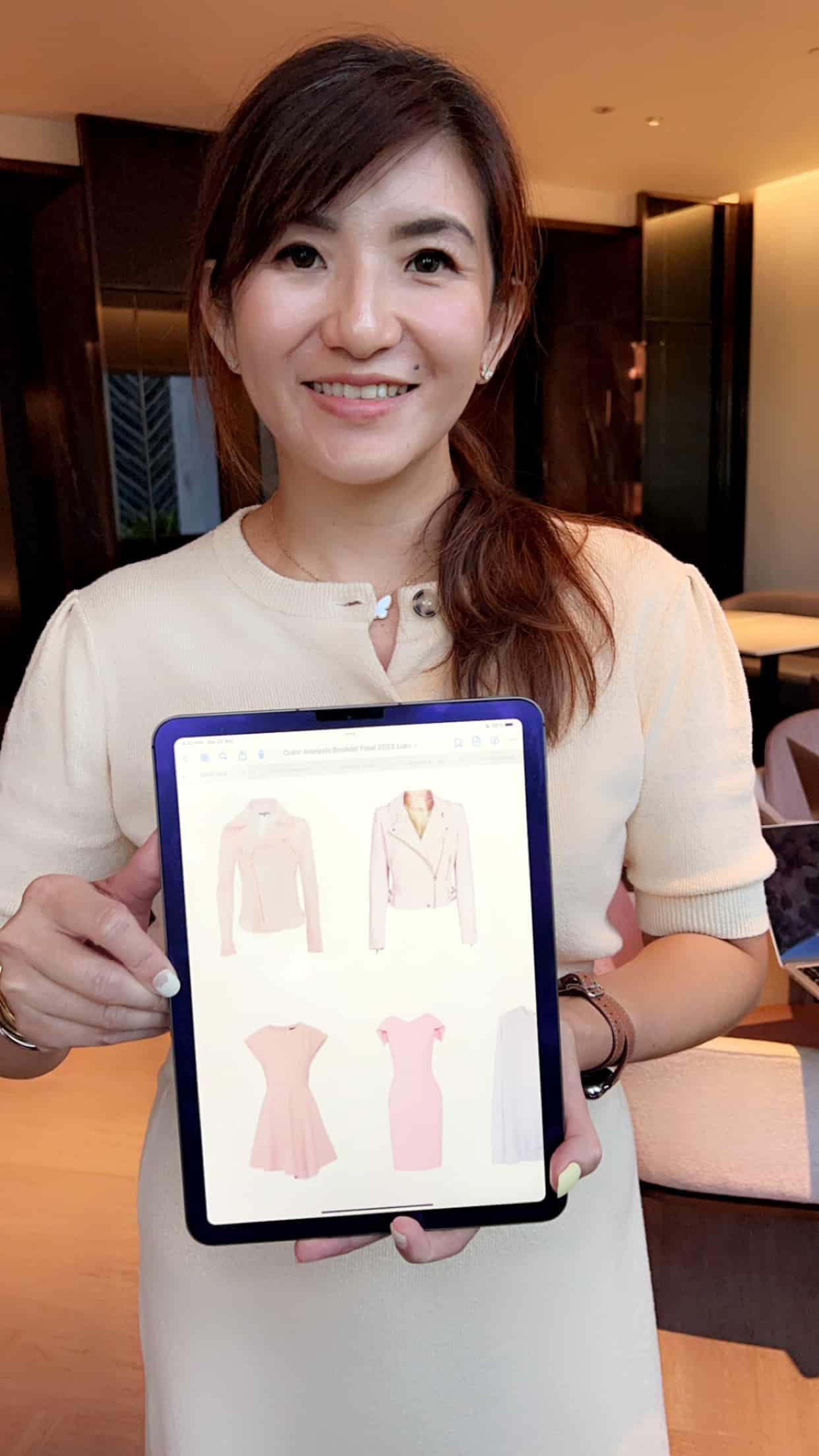
Sterling Style Academy has trained students internationally, including in major style and beauty markets across Asia. Students who want to learn professional color analysis in person may be interested in our Asia-based training options.
If you are based in Singapore or Southeast Asia, explore our Singapore Color Analysis Training.
If you are based in Thailand or nearby regions, explore our Bangkok Color Analysis Training.
Students who prefer flexible remote learning can also study through our Online Color Analysis Certification.
Which System Is Better: Korean Color Analysis or Seasonal Color Analysis?
Neither system is automatically better. The best method depends on the client’s goals and the analyst’s training.
Korean color analysis may be ideal for clients who want a beauty-focused consultation, especially for makeup and complexion harmony.
Seasonal color analysis may be ideal for clients who want a broader wardrobe, personal styling, and image consulting framework.
A professional color analyst may use principles from both while also applying deeper training in undertone, value, chroma, contrast, and color harmony.
The strongest approach is not memorizing labels. It is learning how to see color accurately and translate that knowledge into practical client advice.
Can Korean Color Analysis Be Used for Non-Asian Clients?
Yes. Korean color analysis concepts can be useful for many clients, especially when focusing on complexion, makeup, and brightness. However, it should not be treated as a one-size-fits-all system.
Every client needs an individual analysis. The same color may brighten one person and wash out another. The same lipstick may look fresh on one client and harsh on another.
Professional color analysis should always consider the individual, not only ethnicity, trend, or surface-level appearance.
Can Seasonal Color Analysis Be Used for Asian Clients?
Yes. Seasonal color analysis can be used for Asian clients when it is applied correctly. The mistake is assuming that all Asian clients belong to the same season or that all Asian skin is warm.
Asian clients can belong to any color family. Some may be Springs, some Summers, some Autumns, and some Winters. Some may be soft and muted. Others may be bright and clear. Some may be warm, cool, neutral, or olive.
A well-trained color analyst understands that seasonal color analysis must be adapted to the individual.
Common Mistakes in Korean and Seasonal Color Analysis
Whether using Korean color analysis, seasonal color analysis, or another method, there are common mistakes analysts should avoid.
These include:
- Assuming ethnicity determines the palette
- Looking only at skin and ignoring hair and eyes
- Looking only at hair and ignoring skin response
- Confusing yellow surface tone with warm undertone
- Assuming fair skin is always cool
- Assuming deeper skin is always warm
- Ignoring contrast level
- Relying only on online quizzes
- Using poor lighting
- Treating seasonal labels as rigid rules
- Giving clients impractical color advice
Color analysis should be precise, flexible, and useful. The goal is not to force a client into a trend. The goal is to help them understand their best colors with clarity.
How Color Analysis Helps Personal Stylists and Image Consultants
Color analysis is one of the most valuable skills a personal stylist or image consultant can learn. It helps you guide clients with more authority and makes your recommendations more specific.
Color analysis can support:
- Wardrobe edits
- Personal shopping
- Makeup consultations
- Hair color direction
- Personal branding
- Professional image development
- Style transformations
- Capsule wardrobe planning
- Special event styling
For stylists and consultants, color analysis also creates a strong entry-level service. Many clients understand the desire to “find my best colors,” even if they are not yet ready for a full image consulting package.
How to Learn Color Analysis Professionally
To learn color analysis professionally, you need more than a basic understanding of seasons. You need to learn how color works, how to analyze different clients, and how to communicate results clearly.
A strong color analysis training program should teach:
- Color theory
- Undertone analysis
- Seasonal color analysis
- Tonal analysis
- Value and chroma
- Contrast
- Client consultation structure
- Wardrobe color application
- Makeup color recommendations
- Hair color direction
- How to offer color analysis as a service
To begin your professional training, explore our Online Color Analysis Certification or 2-Day Color Analysis Training In-Person.
You can also read our guide on how to become a certified color analyst to understand the full career path.
Related Color Analysis Training Guides
If you are comparing color analysis training options, these guides can help:
- What Is Seasonal Color Analysis?
- Color Analysis Course Online Without Using Drapes
- How to Become a Certified Color Analyst
- Best Color Analysis Courses: Top Color Analysis Certification & Training Programs in 2026
- Online vs In-Person Color Analysis Training: Which Is Better?
- How Much Does Color Analysis Training Cost?
FAQs About Korean Color Analysis vs Seasonal Color Analysis
What is Korean color analysis?
Korean color analysis is a personal color analysis approach often associated with K-beauty and Korean styling. It focuses on how colors affect the skin, complexion, makeup harmony, hair color, and overall appearance.
What is seasonal color analysis?
Seasonal color analysis is a system that groups people into color palettes such as Spring, Summer, Autumn, and Winter based on undertone, depth, brightness, softness, contrast, hair color, eye color, and skin tone.
Is Korean color analysis the same as seasonal color analysis?
No. Korean color analysis may use seasonal categories, but it often focuses more on complexion, brightness, and beauty application. Seasonal color analysis is usually a broader system used for wardrobe, makeup, hair color, and personal styling.
Is Korean color analysis only for Asian clients?
No. Korean color analysis concepts can be used for many clients, especially for makeup and complexion-focused recommendations. However, professional color analysis should always be personalized to the individual.
Can Asian clients use seasonal color analysis?
Yes. Asian clients can belong to any seasonal color family, including Spring, Summer, Autumn, or Winter. A professional analyst should evaluate each client individually rather than assuming a season based on ethnicity.
Which is better: Korean color analysis or seasonal color analysis?
Neither is automatically better. Korean color analysis may be ideal for beauty-focused clients, while seasonal color analysis may be better for broader wardrobe and styling guidance. Professional color analysts benefit from understanding both.
Does Korean color analysis include makeup recommendations?
Yes, Korean color analysis often includes makeup recommendations, especially lipstick, blush, eyeshadow, and hair color guidance.
Does seasonal color analysis include makeup recommendations?
Yes, seasonal color analysis can include makeup recommendations, but it also commonly includes clothing colors, wardrobe neutrals, accessories, and personal style guidance.
Can I learn Korean color analysis online?
You can learn color analysis principles online, including undertone, seasonal palettes, and client consultation skills. Sterling Style Academy offers an Online Color Analysis Certification for students who want to learn professional color analysis remotely.
Can I learn color analysis without using drapes?
Yes. Color analysis can be taught through a professional system that studies undertone, value, chroma, contrast, and personal coloring without relying only on traditional fabric draping. Learn more about Sterling Style Academy’s color analysis course online without using drapes.
How do I become a certified color analyst?
To become a certified color analyst, complete a professional color analysis training program that teaches color theory, undertone, seasonal color analysis, contrast, client consultation skills, and practical service delivery. Read our guide on how to become a certified color analyst for the full path.
Final Thoughts: Korean Color Analysis vs Seasonal Color Analysis
Korean color analysis and seasonal color analysis both help clients understand their best colors, but they are not identical.
Korean color analysis is often more beauty-focused, with an emphasis on complexion, makeup, brightness, and harmony. Seasonal color analysis is usually broader, organizing clients into palettes such as Spring, Summer, Autumn, and Winter for wardrobe, makeup, hair color, and personal style guidance.
For clients, both methods can offer valuable insight. For professionals, the strongest approach is learning how to analyze color with depth, flexibility, and accuracy.
If you want to learn color analysis professionally, Sterling Style Academy offers flexible online and in-person training options.
Explore the Online Color Analysis Certification if you want to study from anywhere.
Explore the 2-Day Color Analysis Training In-Person if you prefer hands-on classroom training.
If you are based in Asia, you can also review our Singapore Color Analysis Training and Bangkok Color Analysis Training options.