
What is Seasonal Color Analysis? Options for Color Analysis
What Is Seasonal Color Analysis? A Complete Guide to Color Seasons
Seasonal color analysis is a method used to identify the colors that harmonize best with a person’s natural coloring. It looks at skin undertone, hair color, eye color, contrast, depth, and brightness to determine which color palette makes someone appear more balanced, fresh, polished, and naturally vibrant.
In simple terms, seasonal color analysis helps answer one of the most common style questions:
Which colors look best on me?
Instead of guessing or buying clothing based only on trends, seasonal color analysis gives you a personalized color direction. It can help you choose better clothing colors, makeup shades, hair color direction, accessories, and wardrobe neutrals.
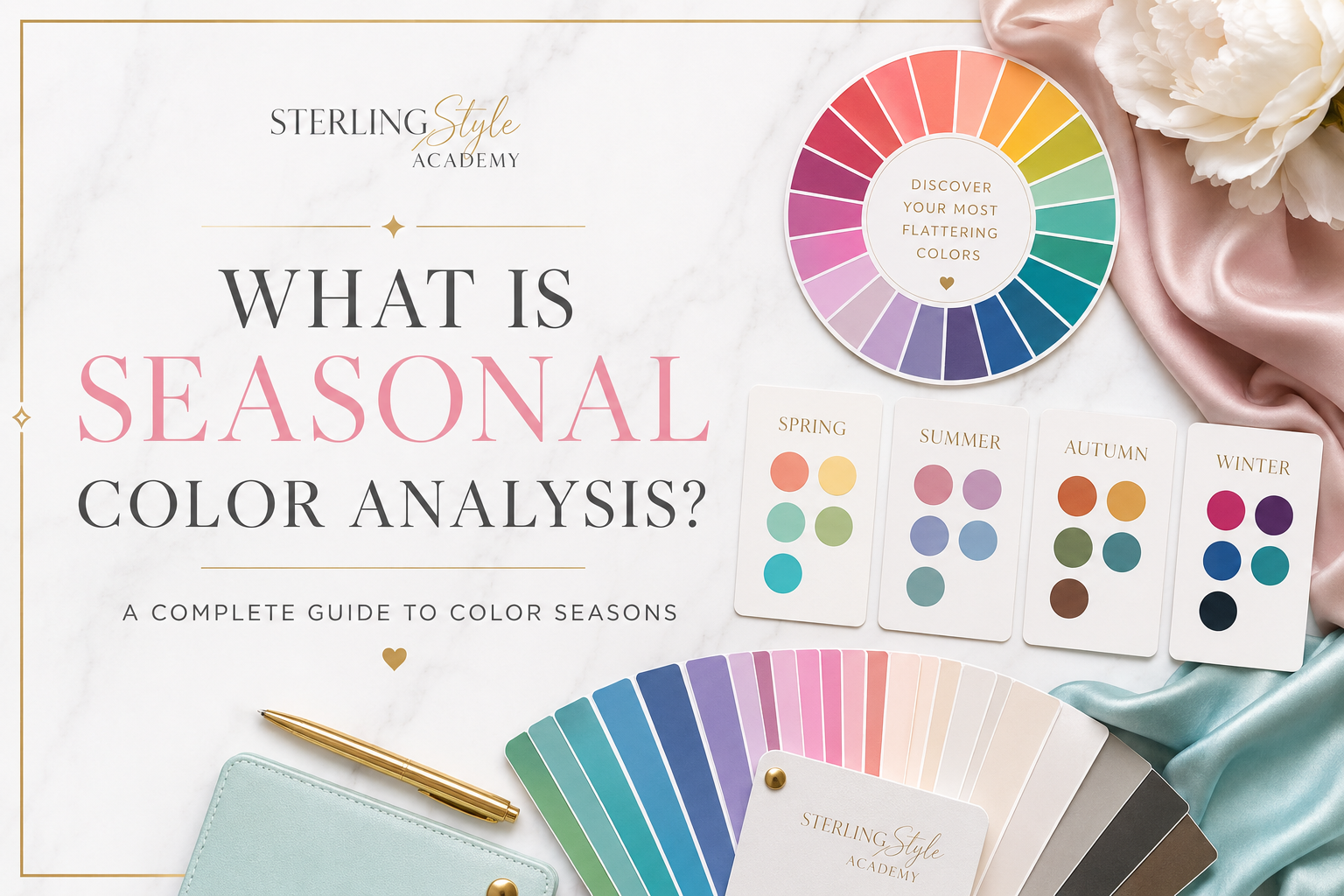
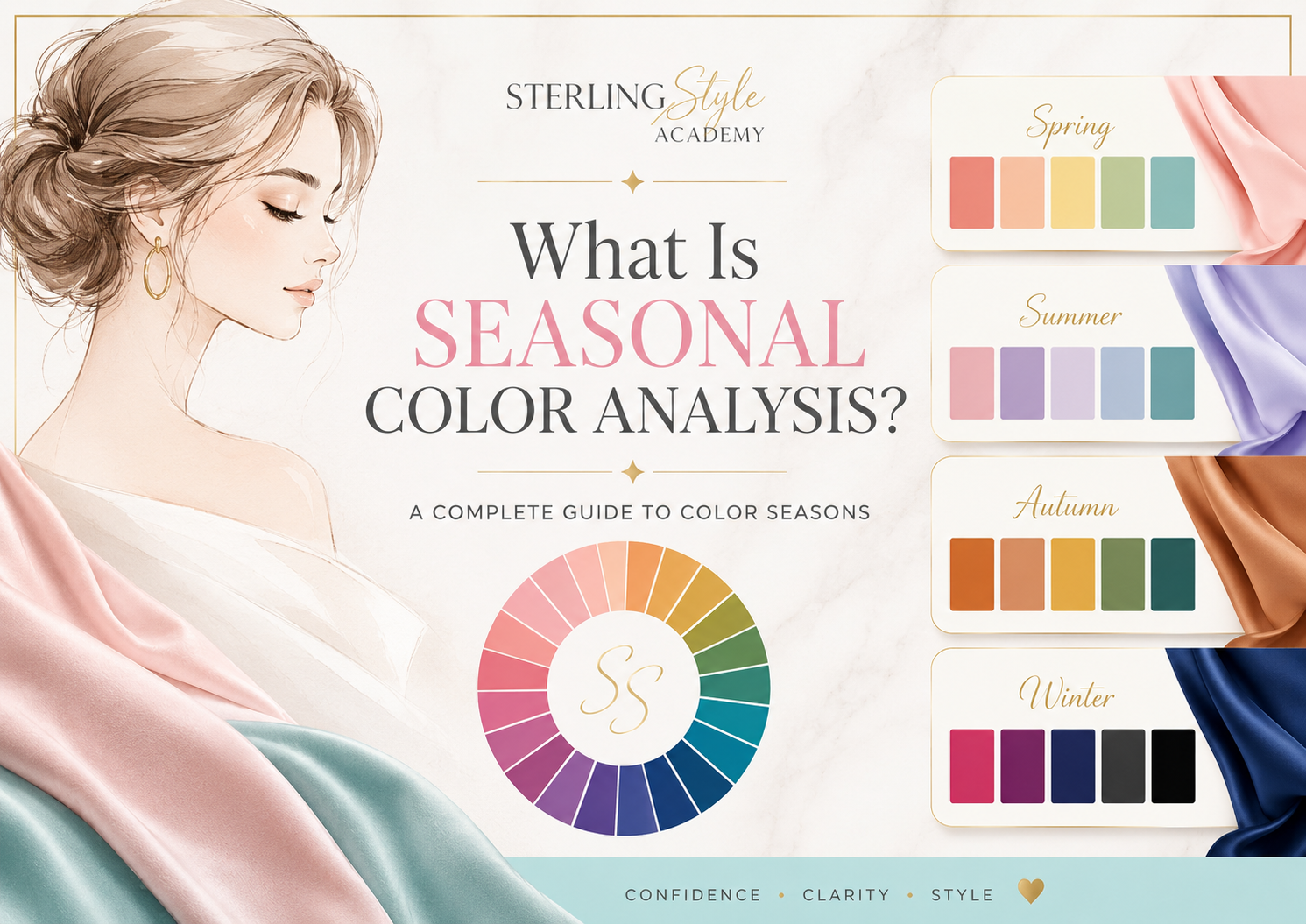
The most well-known seasonal color analysis system divides people into four main color seasons:
- Spring
- Summer
- Autumn
- Winter
Many modern systems expand this into 12 seasonal color palettes for more accuracy, such as Light Spring, Soft Autumn, True Winter, and Cool Summer.
Whether you want to discover your own colors, improve your wardrobe, or learn color analysis professionally, understanding the seasonal color system is one of the best places to start.
What Is Seasonal Color Analysis?
Seasonal color analysis is a personal color analysis method that groups people into seasonal palettes based on their natural coloring. The goal is to identify the colors that create the most harmony with your skin, eyes, hair, and overall appearance.
A professional color analyst studies several visual factors, including:
- Skin undertone
- Hair color
- Eye color
- Natural contrast
- Depth
- Brightness
- Softness
- Warmth or coolness
- Overall color harmony
The seasonal color analysis system is based on the idea that people, like colors, can be grouped according to temperature, value, and intensity. Some people look best in warm, golden, clear colors. Others look best in cool, soft, muted shades. Some people need deep, bold contrast, while others need lighter, more delicate colors.
The result is a color palette that can be used for clothing, makeup, accessories, hair color, and personal styling decisions.
What Are the Four Color Seasons?
The four main color seasons are Spring, Summer, Autumn, and Winter. Each season has its own color characteristics.
Spring Color Analysis
Spring color palettes are usually warm, clear, fresh, and light to medium in depth. Spring colors often feel bright, sunny, and energetic.
Spring colors may include:
- Coral
- Peach
- Warm pink
- Golden yellow
- Light turquoise
- Apple green
- Ivory
- Warm beige
- Camel
- Clear warm red
People in the Spring family often look best in colors that feel fresh, warm, and lively. Heavy, dark, muted colors can sometimes overpower Spring coloring.
Spring color analysis is often associated with warmth and clarity. In the 12-season system, Spring may be divided into Light Spring, True Spring, and Bright Spring.
Summer Color Analysis
Summer color palettes are usually cool, soft, and gentle. Summer colors often have a muted or powdery quality rather than a bright or golden look.
Summer colors may include:
- Dusty rose
- Soft blue
- Lavender
- Powder pink
- Cool mauve
- Soft navy
- Blue-gray
- Cool taupe
- Soft raspberry
- Plum
People in the Summer family usually look best in colors that are cool, refined, and softened. Very warm, orange-based, or overly bright colors may appear too harsh against Summer coloring.
In the 12-season system, Summer may be divided into Light Summer, True Summer, and Soft Summer.
Autumn Color Analysis
Autumn color palettes are usually warm, rich, earthy, and muted. Autumn colors often have depth, warmth, and a golden or spicy quality.
Autumn colors may include:
- Olive green
- Rust
- Terracotta
- Mustard
- Camel
- Chocolate brown
- Warm beige
- Moss green
- Burnt orange
- Deep teal
People in the Autumn family often look best in colors that feel grounded, warm, and natural. Cool icy colors or very bright shades can sometimes look disconnected from Autumn coloring.
In the 12-season system, Autumn may be divided into Soft Autumn, True Autumn, and Dark Autumn.
Winter Color Analysis
Winter color palettes are usually cool, clear, deep, and high contrast. Winter colors often feel bold, crisp, dramatic, and saturated.
Winter colors may include:
- Black
- Pure white
- Royal blue
- Emerald green
- Fuchsia
- True red
- Icy pink
- Charcoal
- Burgundy
- Cool navy
People in the Winter family often look best in sharp, cool, saturated colors. Muted earth tones, warm oranges, and dusty shades may make Winter coloring look dull.
In the 12-season system, Winter may be divided into Dark Winter, True Winter, and Bright Winter.
What Is the 12-Season Color Analysis System?
The 12-season color analysis system expands the four traditional seasons into more specific palettes. This gives a more nuanced result because not everyone fits perfectly into only Spring, Summer, Autumn, or Winter.
The 12 seasonal color palettes are commonly grouped as:
- Light Spring
- True Spring
- Bright Spring
- Light Summer
- True Summer
- Soft Summer
- Soft Autumn
- True Autumn
- Dark Autumn
- Dark Winter
- True Winter
- Bright Winter
This system looks more closely at a person’s dominant color characteristics. For example, one person may be primarily light, another may be primarily soft, and another may be primarily deep or bright.
The 12-season system can be especially helpful when someone seems to fall between two seasons. For example, Soft Summer and Soft Autumn can appear similar because both are muted, but one is cooler and the other is warmer. Bright Spring and Bright Winter can both handle clarity and contrast, but one is warmer and the other is cooler.
A trained color analyst learns how to compare these differences and determine which palette creates the most harmony.
What Is the Purpose of Seasonal Color Analysis?
The purpose of seasonal color analysis is to help you choose colors that enhance your natural appearance. When you wear colors that harmonize with your coloring, your skin may look clearer, your eyes may appear brighter, and your overall appearance may feel more balanced.
Seasonal color analysis can help with:
- Choosing flattering clothing colors
- Building a cohesive wardrobe
- Selecting makeup shades
- Choosing hair color direction
- Finding your best neutrals
- Shopping with more confidence
- Avoiding colors that wash you out
- Creating a more polished personal image
Many people use seasonal color analysis because they feel overwhelmed by shopping. They may own many clothes but still feel like nothing looks quite right. A color palette gives them a clearer framework.
Instead of asking, “Do I like this color?” they can also ask, “Does this color support my natural coloring?”
How Does Seasonal Color Analysis Work?
Seasonal color analysis works by comparing your natural coloring to different color qualities. A color analyst looks at how your features respond to warmth, coolness, depth, lightness, brightness, and softness.
The process may include evaluating:
- Whether your undertone appears warm, cool, or neutral
- Whether your coloring is light, medium, or deep
- Whether your features are soft and blended or clear and high contrast
- Whether muted or bright colors look more harmonious
- Whether warm or cool colors create a healthier appearance
- Whether certain shades make your face look lifted, tired, harsh, or washed out
In an in-person consultation, a color analyst may use fabric drapes to compare different colors against your face. In an online color analysis consultation, the analyst may evaluate high-quality photos and use digital tools to study your coloring.
The goal is not just to label someone as a season. The goal is to explain which colors work best and how to use them in real life.
Seasonal Color Analysis and Skin Tone
Skin tone is one of the most important parts of seasonal color analysis, but it is also one of the most misunderstood.
Many people assume that fair skin is always cool or deep skin is always warm. This is not true. People of every skin depth can have warm, cool, neutral, olive, or blended undertones.
A professional color analyst looks beyond surface color. They study how different color temperatures affect the appearance of the skin.
For example:
- Warm colors may make some people look golden, healthy, and vibrant.
- Warm colors may make others look yellow, tired, or uneven.
- Cool colors may make some people look clear and fresh.
- Cool colors may make others look gray, dull, or drained.
This is why seasonal color analysis is more than simply looking at whether someone has light or dark skin. The key is color response.
Seasonal Color Analysis and Hair Color
Hair color can influence seasonal color analysis, but it should not be the only factor. Natural hair color, depth, warmth, coolness, and contrast can all provide clues, but dyed hair can sometimes confuse the analysis.
For example, a person with naturally cool coloring may dye their hair warm blonde, which can make their seasonal result harder to see. Another person may have deep hair but still belong to a softer palette because their skin and eyes respond better to muted colors.
Hair color can help identify:
- Natural depth
- Contrast level
- Warmth or coolness
- Softness or brightness
- Whether the overall appearance is more blended or dramatic
Seasonal color analysis can also help guide future hair color choices. Once you know your palette, you can choose hair colors that support your natural coloring instead of fighting against it.
Seasonal Color Analysis and Eye Color
Eye color can also be useful in seasonal color analysis. Analysts may look at the eye’s depth, brightness, pattern, warmth, coolness, and contrast.
For example:
- Warm golden or amber flecks may suggest warmth.
- Cool gray, blue, or icy qualities may suggest coolness.
- Deep, high-contrast eyes may support Winter or Autumn palettes.
- Soft, blended eyes may support Summer or Autumn palettes.
- Bright, clear eyes may support Spring or Winter palettes.
However, eye color alone does not determine your season. Two people with brown eyes may belong to completely different palettes. Two people with blue eyes may also belong to different seasons.
The full analysis comes from the relationship between skin, hair, eyes, and how the person responds to color.
Seasonal Color Analysis for Clothing
One of the most practical benefits of seasonal color analysis is learning which clothing colors are most flattering.
Your seasonal palette can help you choose:
- Tops
- Dresses
- Jackets
- Neutrals
- Prints
- Accessories
- Shoes
- Bags
- Professional wardrobe colors
- Special occasion outfits
Clothing colors matter because they sit close to your face and can strongly affect your overall appearance. The right color can make you look brighter, healthier, and more refined. The wrong color can make you look tired, washed out, or overly harsh.
Seasonal color analysis can also make shopping easier. Instead of buying random pieces, you can build a wardrobe around colors that work together.
Seasonal Color Analysis for Makeup
Seasonal color analysis is especially helpful for makeup because makeup colors sit directly on the face.
Your seasonal palette can guide:
- Foundation undertone
- Lipstick shades
- Blush colors
- Eyeshadow tones
- Eyeliner colors
- Bronzer warmth
- Highlighter tone
- Nail colors
For example, someone in a cool palette may look better in rose, berry, mauve, or blue-based red lip colors. Someone in a warm palette may look better in peach, coral, terracotta, or warm red lip colors.
Makeup that matches your seasonal palette can look more natural and harmonious. Makeup that fights your coloring may look disconnected, heavy, or aging.
What Color Season Am I?
To determine your color season, you need to look at three main characteristics:
- Temperature: warm or cool
- Value: light or deep
- Chroma: soft or bright
A simple starting point is to ask:
- Do warm or cool colors look better on me?
- Do lighter or deeper colors look better on me?
- Do soft muted colors or bright clear colors look better on me?
- Do I look better in gold, silver, or both?
- Do black and white look natural on me, or do they feel too harsh?
- Do earth tones make me glow or look dull?
- Do pastels flatter me or wash me out?
These questions can give clues, but self-analysis can be difficult because lighting, makeup, hair dye, camera settings, and personal preference can interfere.
For a more accurate result, many people choose to work with a professional color analyst or complete a structured color analysis consultation.
Is Seasonal Color Analysis the Only Color Analysis Method?
No, seasonal color analysis is not the only color analysis method. It is one of the most popular systems, but some professional color analysts use additional methods or customized approaches.
Some systems focus on:
- 4-season analysis
- 12-season analysis
- Tonal color analysis
- Dominant color characteristics
- Warm vs cool analysis
- Contrast analysis
- Custom palettes
- Digital color analysis
- Draping-based analysis
At Sterling Style Academy, color analysis training teaches students how to evaluate personal coloring with a professional eye, rather than relying only on oversimplified rules or online quizzes. The goal is to understand color relationships clearly and apply them to real clients.
If you want to learn color analysis professionally, explore our Online Color Analysis Certification or our 2-Day Color Analysis Training In-Person.
Can You Learn Seasonal Color Analysis Online?
Yes, you can learn seasonal color analysis online if the training program teaches professional color theory, undertone, value, chroma, contrast, and client consultation skills.
Online color analysis training can be especially useful if you want to study from anywhere, review the material at your own pace, and learn how to offer color analysis services professionally.
Sterling Style Academy’s Online Color Analysis Certification teaches students how to understand personal coloring and apply color analysis principles in a professional consultation setting.
Online learning may be ideal if you:
- Want flexible training
- Prefer to study from home
- Are building a styling or image consulting business
- Want to add color analysis to your services
- Need lifetime access to training materials
- Want to learn before attending an in-person class
If you prefer hands-on classroom training, our 2-Day Color Analysis Training In-Person may be a better fit.
How to Become a Certified Color Analyst
If you are interested in working professionally with clients, you may want to become a certified color analyst. Certification helps you learn the method, build confidence, and communicate your recommendations clearly.
A certified color analyst should understand:
- Color theory
- Seasonal color analysis
- Undertone analysis
- Value and chroma
- Contrast
- Client consultations
- Wardrobe color recommendations
- Makeup color guidance
- How to explain color results
- How to offer color analysis as a service
To learn the full career path, read our guide on how to become a certified color analyst.
You can also compare the best color analysis courses and certification programs in 2026 and review online vs in-person color analysis training before choosing a program.
Seasonal Color Analysis vs Personal Color Analysis
Seasonal color analysis and personal color analysis are closely related, but they are not always exactly the same.
Seasonal color analysis usually refers to a system that places someone into a seasonal palette, such as Spring, Summer, Autumn, or Winter.
Personal color analysis is a broader term. It may include seasonal analysis, tonal analysis, custom palette creation, makeup recommendations, hair color guidance, and wardrobe color strategy.
In other words:
Seasonal color analysis is one method of personal color analysis.
Personal color analysis is the broader service of identifying someone’s most flattering colors.
Both approaches can be valuable when done professionally.
Are Online Seasonal Color Analysis Quizzes Accurate?
Online seasonal color analysis quizzes can be fun, but they are not always accurate. Many quizzes rely on simple questions about hair color, eye color, and skin tone, but professional analysis requires more nuance.
Quizzes may not account for:
- Mixed undertones
- Olive undertones
- Dyed hair
- Makeup
- Lighting
- Camera distortion
- Surface redness
- Contrast level
- Softness vs brightness
- Neutral coloring
A quiz can give you a starting point, but it should not be treated as a final professional result.
If you want a more accurate analysis, work with a trained color analyst or learn the method professionally through a structured certification program.
Why Seasonal Color Analysis Became Popular Again
Seasonal color analysis has become popular again because people want more intentional wardrobes. Many shoppers are tired of buying clothing that sits unworn in the closet. They want to understand what actually works for them.
Social media has also made color analysis more visible. People enjoy seeing before-and-after comparisons, seasonal palettes, and examples of how the right color can change someone’s appearance.
However, the popularity of color analysis has also created confusion. There is a lot of oversimplified advice online. Not everyone can be accurately analyzed from one selfie or a basic quiz.
That is why professional training matters. A trained color analyst learns how to evaluate the whole person and explain the result clearly.
Benefits of Seasonal Color Analysis
Seasonal color analysis can help you:
- Shop with more confidence
- Build a more cohesive wardrobe
- Choose better makeup colors
- Understand your best neutrals
- Avoid unflattering clothing colors
- Reduce impulse purchases
- Create outfits more easily
- Look more polished
- Feel more confident in your appearance
- Develop a stronger personal style
For clients, color analysis can be a powerful style reset. For professionals, it can be a valuable service to add to image consulting, personal styling, wardrobe consulting, or beauty services.
Common Seasonal Color Analysis Mistakes
Some common color analysis mistakes include:
- Assuming all fair skin is cool
- Assuming all deep skin is warm
- Assuming all blondes are Springs
- Assuming all brunettes are Winters
- Ignoring contrast level
- Confusing brightness with warmth
- Confusing softness with coolness
- Letting dyed hair dominate the result
- Using poor lighting
- Relying only on online quizzes
- Treating seasons as rigid rules instead of helpful palettes
A strong color analysis process looks at the complete relationship between skin, hair, eyes, and color response.
How to Use Your Seasonal Color Palette
Once you know your seasonal color palette, use it as a guide rather than a prison. Your palette should help you shop smarter and dress more confidently, not make you feel restricted.
You can use your palette to:
- Choose clothing near your face
- Build a capsule wardrobe
- Select makeup shades
- Choose jewelry tones
- Plan professional outfits
- Shop for special events
- Coordinate prints and accessories
- Decide which colors to avoid or soften
You do not need to throw away your entire wardrobe. Start by using your best colors near your face, such as tops, scarves, jackets, earrings, and makeup.
Over time, you can build a wardrobe that feels more harmonious and easier to wear.
Related Guides for Color Analysis Training
If you want to understand color analysis more deeply, these related guides can help you compare training options and career paths:
- How to Become a Certified Color Analyst
- Best Color Analysis Courses: Top Color Analysis Certification & Training Programs in 2026
- Online vs In-Person Color Analysis Training: Which Is Better?
- How Much Does Color Analysis Training Cost?
FAQs About Seasonal Color Analysis
What is seasonal color analysis?
Seasonal color analysis is a method used to identify the colors that best harmonize with a person’s natural skin tone, hair color, eye color, undertone, contrast, and overall coloring. It usually places someone into a seasonal palette such as Spring, Summer, Autumn, or Winter.
What are the four color seasons?
The four main color seasons are Spring, Summer, Autumn, and Winter. Spring and Autumn are generally warm seasons, while Summer and Winter are generally cool seasons. Spring and Winter tend to be clearer, while Summer and Autumn tend to be softer or more muted.
How do I know my color season?
You can begin by comparing whether warm or cool colors look better on you, whether light or deep colors are more flattering, and whether soft or bright colors create more harmony. For the most accurate result, work with a trained color analyst or complete a professional consultation.
Is seasonal color analysis accurate?
Seasonal color analysis can be accurate when performed by a trained professional who understands undertone, value, chroma, contrast, and color harmony. Simple online quizzes may be less accurate because they often rely on surface-level features.
Can I learn seasonal color analysis online?
Yes. You can learn seasonal color analysis online through a structured training program that teaches color theory, undertone, seasonal palettes, and client consultation skills. Sterling Style Academy offers an Online Color Analysis Certification for students who want to study remotely.
Is seasonal color analysis only for women?
No. Seasonal color analysis can be used for anyone who wants to understand their best colors. Men can also use color analysis for professional wardrobes, casual clothing, grooming, and personal branding.
What is the difference between warm and cool undertones?
Warm undertones usually harmonize with golden, peachy, yellow-based, or earthy colors. Cool undertones usually harmonize with blue-based, pink-based, icy, or jewel-toned colors. Some people appear neutral or have a mix of undertone qualities.
What is the difference between soft and bright coloring?
Soft coloring looks best with muted, blended, or slightly greyed colors. Bright coloring looks best with clearer, more saturated colors. This is one reason two people with similar hair or eye color may belong to different seasonal palettes.
What is the difference between light and deep coloring?
Light coloring is flattered by lighter, more delicate colors, while deep coloring is flattered by richer, darker colors. Value is one of the key factors used in seasonal color analysis.
Is seasonal color analysis the same as color analysis?
Seasonal color analysis is one type of color analysis. Color analysis is the broader term for identifying someone’s most flattering colors, while seasonal color analysis specifically uses seasonal palettes such as Spring, Summer, Autumn, and Winter.
Final Thoughts: What Is Seasonal Color Analysis?
Seasonal color analysis is a practical method for discovering the colors that best support your natural beauty. By understanding your season, undertone, value, chroma, and contrast level, you can make better decisions about clothing, makeup, hair color, and personal style.
The goal is not to limit your style. The goal is to give you clarity. When you know your best colors, shopping becomes easier, outfits feel more cohesive, and your appearance can look more polished and intentional.
If you want to learn color analysis professionally, Sterling Style Academy offers both online and in-person training options.
Explore the Online Color Analysis Certification if you want to study from anywhere, or learn more about our 2-Day Color Analysis Training In-Person if you prefer hands-on classroom training.
Ready to become certified in professional color analysis?
Our 2-Day Color Analysis Training teaches you how to analyze undertones, contrast, and color harmony using a precise, real-world methodology. →View Upcoming Color Analysis Training Courses
For those who prefer flexibility, you can also explore our Online Color Analysis Certification.