
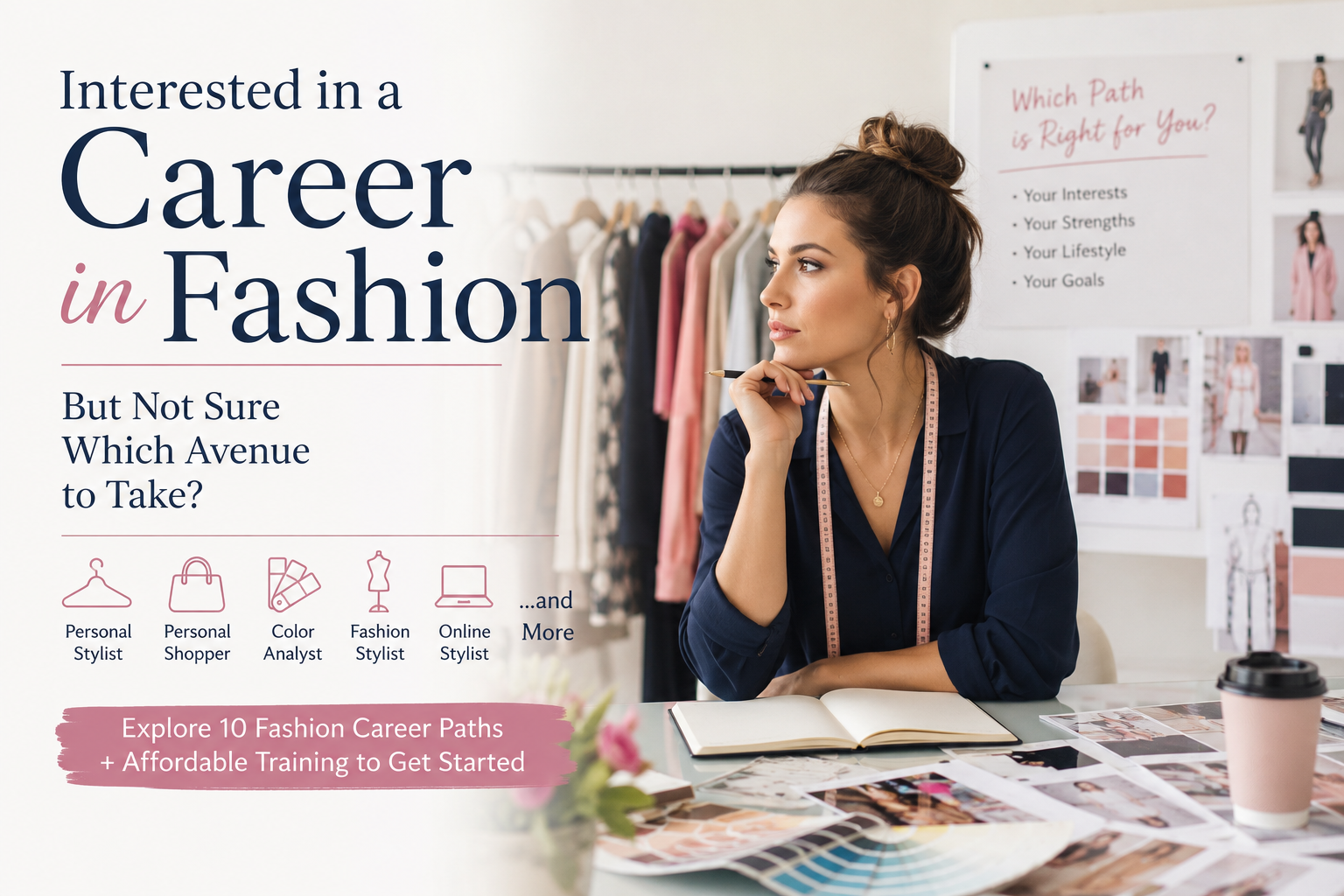
Interested in a Career in Fashion? 10 Fashion Career Paths
A career in fashion can sound exciting—but “working in fashion” can mean many different things.
You might imagine styling clients, shopping for clothing, creating editorial photoshoots, designing collections, analyzing color, building capsule wardrobes, working in retail, or launching your own fashion business. These careers may overlap, but the responsibilities, skills, clients, and working environments can be very different.
Before investing thousands of dollars in a degree or advanced certification program, it is important to understand which fashion career path best matches your strengths, interests, and goals.
This guide explains several popular fashion careers and introduces an affordable way to begin developing practical styling skills through Sterling Style Academy’s new Online Stylist Training program for $797.
What Type of Fashion Career Is Right for You?
The right fashion career depends on more than simply loving clothes.
Ask yourself:
- Do you enjoy working directly with people?
- Do you prefer styling real clients or creating fashion images?
- Are you interested in color, body shape, wardrobe planning, or shopping?
- Would you rather work independently or for an established company?
- Do you want to work online, in person, or both?
- Are you looking for a new career, a side business, or skills you can use personally?
Your answers can help you identify the area of fashion that may be the best fit.
1. Personal Stylist
A personal stylist helps individual clients select clothing and create wardrobes that suit their appearance, lifestyle, personality, and goals.
Unlike an editorial fashion stylist, who may be styling a model for a photograph, a personal stylist must consider how clothing works in the client’s real life.
Personal styling services may include:
- Wardrobe consultations
- Closet edits
- Personal shopping
- Outfit coordination
- Capsule wardrobe development
- Special-event styling
- Virtual styling
- Seasonal wardrobe planning
Personal styling may be a good career for you if you enjoy fashion, problem-solving, shopping, and working directly with people.
A successful personal stylist does not simply choose clothing that looks fashionable. The stylist must understand the client’s coloring, proportions, personal preferences, professional needs, budget, lifestyle, and comfort level.
2. Online or Virtual Stylist
Online styling has made it possible to work with clients regardless of location.
A virtual stylist may communicate with clients through video consultations, questionnaires, photographs, digital wardrobe boards, shopping links, and online styling platforms.
Online styling services can include:
- Virtual color and wardrobe consultations
- Online personal shopping
- Digital capsule wardrobes
- Outfit recommendations
- Vacation and travel wardrobes
- Workwear planning
- Special-event styling
- Styling subscription packages
This can be an attractive career path for someone who wants to work remotely, maintain a flexible schedule, or build a styling business without renting a studio.
However, virtual styling still requires genuine knowledge. Sending a client links to fashionable clothing is not enough. You must be able to explain why a particular color, silhouette, proportion, or outfit works for that individual.
3. Personal Shopper
A personal shopper helps clients find and purchase clothing, accessories, and other wardrobe items.
Some personal shoppers work independently, while others work for department stores, boutiques, luxury retailers, or online styling companies.
Personal shopping may include:
- Researching merchandise
- Selecting items before an appointment
- Coordinating fitting-room sessions
- Shopping on behalf of a client
- Finding clothing for a specific event
- Working within the client’s budget
- Managing alterations, deliveries, and returns
This role is ideal for someone who enjoys sourcing clothing and navigating stores, websites, brands, sizing, and price points.
However, strong personal shoppers need more than shopping ability. They should also understand styling, fit, color, body proportions, wardrobe coordination, and client communication.
4. Image Consultant
An image consultant takes a broader approach to a client’s appearance and personal or professional image.
Image consulting can include clothing and personal style, but it may also address grooming, communication, etiquette, professional presence, personal branding, and how an individual is perceived by others.
Image consultants may work with:
- Private individuals
- Executives
- Entrepreneurs
- Job seekers
- Public figures
- Corporate teams
- Universities
- Hospitality organizations
- Retail and service professionals
This career is especially suitable for someone interested in the relationship between appearance, communication, behavior, and perception.
Because image consulting can involve more advanced analysis and professional development, comprehensive training is usually recommended for someone who intends to offer a full range of image consulting services.
5. Color Analyst
A color analyst identifies the colors that best complement a client’s natural coloring.
Color analysis may consider the relationship between the client’s:
- Skin tone and undertone
- Natural hair color
- Eye color
- Contrast level
- Depth and intensity of coloring
The purpose is not merely to place someone into a seasonal category. A professional color analyst must understand how different colors affect the appearance of the skin, eyes, facial features, and overall visual harmony.
Color analysis can be offered as a specialized service or incorporated into personal styling, wardrobe consulting, personal shopping, image consulting, hair, makeup, and beauty services.
It may be a good specialty for someone who enjoys working with color and helping clients make more confident clothing, accessory, hair, and makeup choices.
6. Wardrobe Consultant
A wardrobe consultant helps clients improve how their existing clothing works together.
Instead of beginning with a shopping trip, the consultant may first evaluate what the client already owns.
Wardrobe consulting may include:
- Reviewing the client’s current wardrobe
- Identifying missing essentials
- Removing items that no longer work
- Creating new outfit combinations
- Developing a capsule wardrobe
- Photographing completed outfits
- Preparing a strategic shopping list
This is a valuable service because many clients do not necessarily need more clothing. They need better organization, stronger outfit combinations, and a clearer understanding of what suits them.
Someone who enjoys organization, coordination, and practical problem-solving may find wardrobe consulting especially rewarding.
7. Fashion Stylist
The term “fashion stylist” is often confused with “personal stylist,” but the roles are not always the same.
A fashion stylist commonly works on the visual presentation of clothing for:
- Magazine editorials
- Advertising campaigns
- E-commerce photography
- Fashion shows
- Music videos
- Television productions
- Film
- Celebrity appearances
- Brand content
The fashion stylist may select clothing, borrow samples, coordinate accessories, prepare looks, manage fittings, and work with photographers, models, makeup artists, hairstylists, designers, and creative directors.
This is often a fast-paced, image-focused career. The clothing may be selected to communicate a creative concept rather than to meet the everyday needs of the person wearing it.
Fashion styling may be a good fit if you are highly visual, trend-aware, creative, organized, and comfortable working behind the scenes as part of a production team.
8. Fashion Designer
A fashion designer creates clothing or accessories rather than primarily selecting and coordinating existing pieces.
Fashion design can require knowledge of:
- Design development
- Fashion illustration
- Fabrics and textiles
- Patternmaking
- Garment construction
- Production
- Sizing
- Manufacturing
- Collection planning
Loving fashion does not automatically mean that fashion design is the right path. If your greatest interest is helping people choose clothing rather than constructing it, personal styling may be a better fit.
If you constantly imagine new garments, silhouettes, fabrics, and collections, fashion design may be more appropriate.
9. Visual Merchandiser
A visual merchandiser creates displays that present merchandise attractively and encourage customers to shop.
Visual merchandisers may work with:
- Store windows
- Mannequins
- Product displays
- Floor layouts
- Promotional themes
- Seasonal installations
- Retail signage
- Brand standards
This role combines creativity with retail strategy.
It may appeal to someone who enjoys visual storytelling and fashion presentation but does not necessarily want to conduct individual client consultations.
10. Fashion Content Creator
Fashion content creators produce educational, inspirational, or entertaining content for social media, blogs, video platforms, newsletters, and brand campaigns.
Content may include:
- Styling tips
- Outfit ideas
- Product reviews
- Trend commentary
- Capsule wardrobe examples
- Shopping recommendations
- Fashion education
- Before-and-after transformations
Although someone can begin creating fashion content without formal training, professional styling knowledge can make the content more credible and useful.
There is a significant difference between showing followers what you personally like and teaching them how to select clothing based on their coloring, proportions, lifestyle, and individual style.
Personal Stylist vs. Fashion Stylist: What Is the Difference?
The simplest distinction is this:
A personal stylist typically dresses a real client for the client’s real life.
A fashion stylist commonly styles clothing for a photograph, production, brand, celebrity appearance, or creative concept.
There can be overlap. Some professionals work in both areas. However, the client’s needs, working environment, and purpose of the clothing may be completely different.
Someone who loves helping people feel more confident in everyday life may prefer personal styling.
Someone who loves photoshoots, visual concepts, fashion samples, and production environments may prefer fashion styling.
Do You Need a Fashion Degree to Become a Stylist?
You do not necessarily need a traditional fashion degree to begin learning personal styling.
However, loving clothes or being well dressed does not automatically qualify someone to advise clients professionally.
A trained stylist should understand how to evaluate and coordinate:
- Color
- Body shape
- Proportion
- Fit
- Style personality
- Lifestyle
- Wardrobe needs
- Capsule wardrobes
- Outfit combinations
- Personal shopping selections
Clients are not hiring you to dress them exactly like you. They are hiring you to help them discover what works for them.
That distinction is one of the most important lessons in professional styling.
What Should You Learn First?
If you are just beginning, start with the foundations that apply to almost every type of personal styling work.
These include:
Color
You should understand how color affects a person’s appearance and how to create a coordinated wardrobe palette.
Body Shape and Proportion
A stylist must recognize how garment shapes, lengths, details, and proportions affect the appearance of the body.
Style Personality
Clients have different tastes. Some prefer classic clothing, while others may gravitate toward dramatic, romantic, natural, creative, trendy, or elegant styles.
Capsule Wardrobe Development
A capsule wardrobe helps a client create multiple outfits from a strategic selection of coordinated clothing and accessories.
Personal Shopping
A stylist should know how to select clothing that supports the client’s coloring, body shape, lifestyle, style preferences, and budget.
Outfit Coordination
The ability to create complete outfits is essential. A wardrobe full of individual pieces has limited value if the client does not know how to wear them together.
Begin With Sterling Style Academy’s Online Stylist Training
You may be interested in styling but not yet ready to invest several thousand dollars in an advanced personal stylist or image consultant certification program.
Sterling Style Academy has developed a new Online Stylist Training program for $797 as an accessible entry point into the field.
The program is designed for aspiring stylists as well as individuals who want to learn how to style themselves more effectively.
You will be introduced to practical styling concepts including:
- Color analysis
- Body shape analysis
- Style personalities
- Client wardrobe needs
- Capsule wardrobe development
- Mix-and-match outfit planning
- Personal shopping and styling recommendations
- Creating styling content that demonstrates your knowledge
The course gives you an opportunity to develop foundational styling skills without beginning with the financial commitment of a more advanced professional program.
It is a strong starting point if you:
- Are exploring whether styling is the right career for you
- Want to begin offering entry-level styling services
- Own a boutique or sell clothing and accessories
- Work in beauty, hair, makeup, photography, or retail
- Want to add styling knowledge to an existing business
- Create fashion content online
- Want to improve your own wardrobe and personal style
- May pursue more advanced stylist or image consultant training later
Is the Online Stylist Training a Professional Certification Program?
The $797 Online Stylist Training is an entry-level educational program.
It is designed to teach practical styling foundations and help you begin developing your eye, knowledge, and portfolio. It should not be confused with Sterling Style Academy’s more extensive professional image consultant and personal stylist certification programs.
This makes it especially valuable for someone who is still exploring the industry.
You can begin with an affordable course, gain practical experience, and then decide whether you want to continue into more advanced professional training.
Turn Your Interest in Fashion Into a Practical Skill
You do not have to decide your entire career before taking your first step.
You may begin by learning to create capsule wardrobes and discover that you love personal styling. You may become fascinated by color analysis. You may decide to offer virtual styling services, improve the experience you provide in your boutique, create more authoritative fashion content, or use the knowledge entirely for yourself.
The important thing is to move beyond simply loving fashion and begin understanding how professional styling decisions are made.
Join the Online Stylist Training Waitlist
Sterling Style Academy’s new Online Stylist Training is currently being completed.
The program will be offered for $797, making it an excellent-value starting point for anyone who wants to learn practical styling skills without immediately committing to a higher-priced advanced training program.
Join the waitlist now to receive enrollment information and be notified when the complete course becomes available.
ENROLL IN OUR ONLINE STYLIST TRAINING FOR US$797
Whether you want to explore a career as a stylist, add styling to your current business, create more knowledgeable fashion content, or simply learn how to dress yourself with greater confidence, this course will give you a practical place to begin.
About Sterling Style Academy
Sterling Style Academy provides online and in-person education for aspiring and established personal stylists, image consultants, personal shoppers, and color analysts.
Founded by international personal stylist, image consultant, color analysis expert, author, and educator Michelle T. Sterling, the academy has trained students from around the world in the professional principles of image, fashion, color, personal style, and wardrobe development.